

Recent Blogs
Stay updated with our latest blog posts.

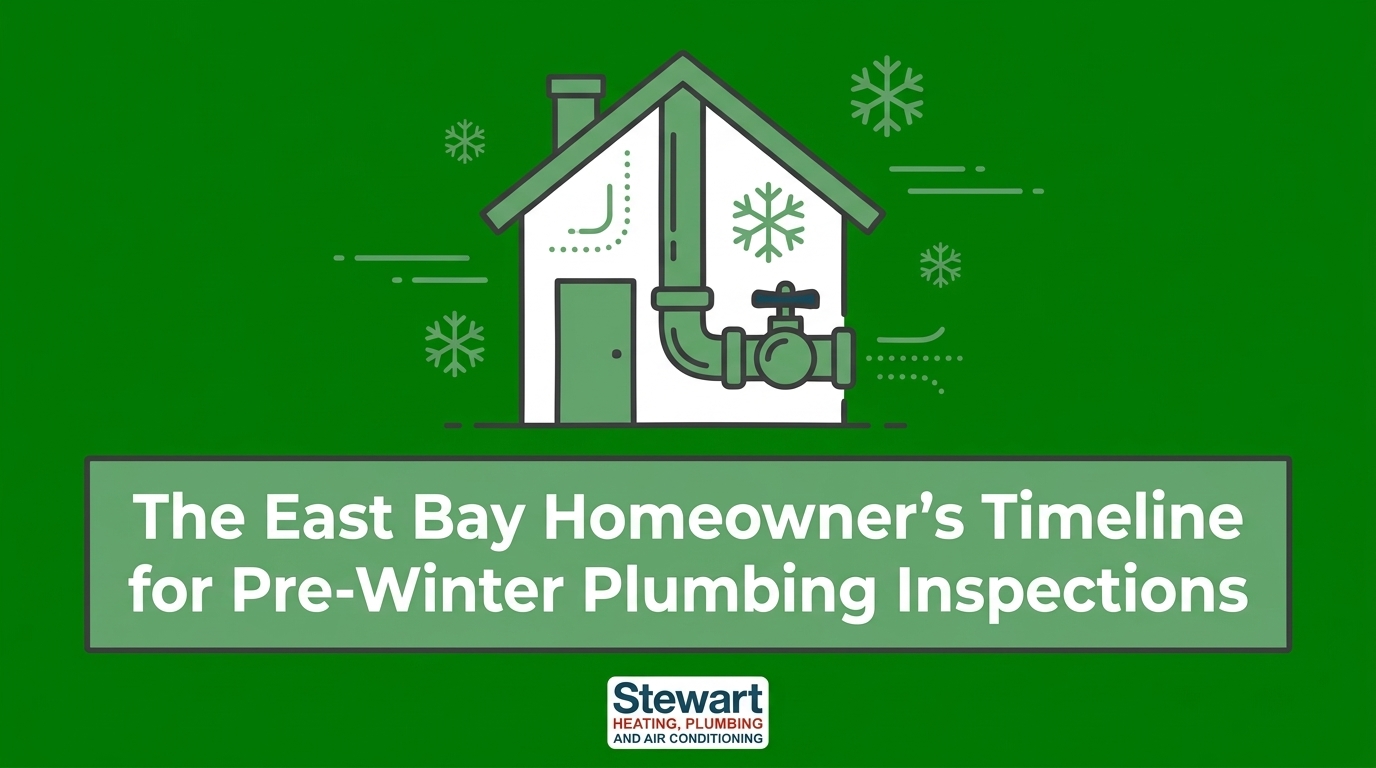
September is arriving in the East Bay, bringing cooler evenings and a noticeable shift in the weather. For many, this transition signals the perfect time to start thinking about home preparation. Finding the right East Bay homeowner timeline for winter plumbing inspections is critical because waiting until the first major cold snap often leads to emergency calls. You want to secure your home before unpredictable temperature shifts put unnecessary stress on your pipes and water heater.
To keep your home protected and your hot water flowing reliably, prioritizing these tasks early makes all the difference. If you are unsure where your system stands, connecting with a team that provides professional plumbing services is the best first step.
Most homeowners struggle to know exactly when to act. The September pre-heating-season transition is the sweet spot. Right now, the weather is mild enough that technicians have flexible schedules, and you have time to make thoughtful decisions about your home's infrastructure. If you wait until late November, you are competing with every other homeowner who suddenly realized their water heater is failing or their outdoor pipes are exposed to the frost.
Common signs you need to start preparing now:
• Inconsistent water temperatures: Your morning shower takes longer to heat up than it did in July.
• Exposed exterior plumbing: Hose bibs and outdoor pipes have no insulation.
• Slow drainage: Yard drains and gutters are already accumulating early fall debris.
• Aging equipment: Your water heater is over ten years old and hasn't been flushed recently.
Taking action now means you control the timeline, rather than letting a sudden weather shift dictate an urgent, stressful repair.
Winter in Pittsburg CA and surrounding East Bay communities looks very different from the snowy deep freezes of the Midwest. Generic winterization advice often misses the mark for our specific regional challenges. We experience a Mediterranean climate characterized by mild, wet winters, but we also face occasional near-freezing overnight temperatures that specifically threaten exposed pipes.
Because Stewart Heating, Plumbing and Air Conditioning has been serving Contra Costa County since 1974, we have deep historical knowledge of how local homes react to these specific weather shifts. Older local housing stock is particularly vulnerable to the dual threat of sudden overnight temperature drops and heavy seasonal rains. To protect your property effectively, you need to schedule a plumbing inspection that focuses on these unique local threats.
Understanding the difference between national plumbing advice and what your home actually needs will save you time and frustration.
• Freezing Pipes — Generic National Advice: Winterize the entire house, drip all indoor faucets constantly. — The East Bay Reality: Focus heavily on outdoor hose bibs, crawlspaces, and exterior water heaters during overnight frost warnings.
• Winter Storms — Generic National Advice: Prepare for heavy snow loads and frozen ground. — The East Bay Reality: Prepare for heavy, sudden seasonal rains that overwhelm yard drainage and sump pumps.
• Water Heaters — Generic National Advice: Turn up the thermostat to combat deep indoor freezing. — The East Bay Reality: Flush sediment to help the unit handle cooler incoming groundwater without overworking.
Your home requires a targeted approach. An overnight frost in Pittsburg can easily crack an uninsulated exterior pipe, even if the following afternoon is sunny and mild. Localized knowledge is your best defense against these unpredictable microclimates.
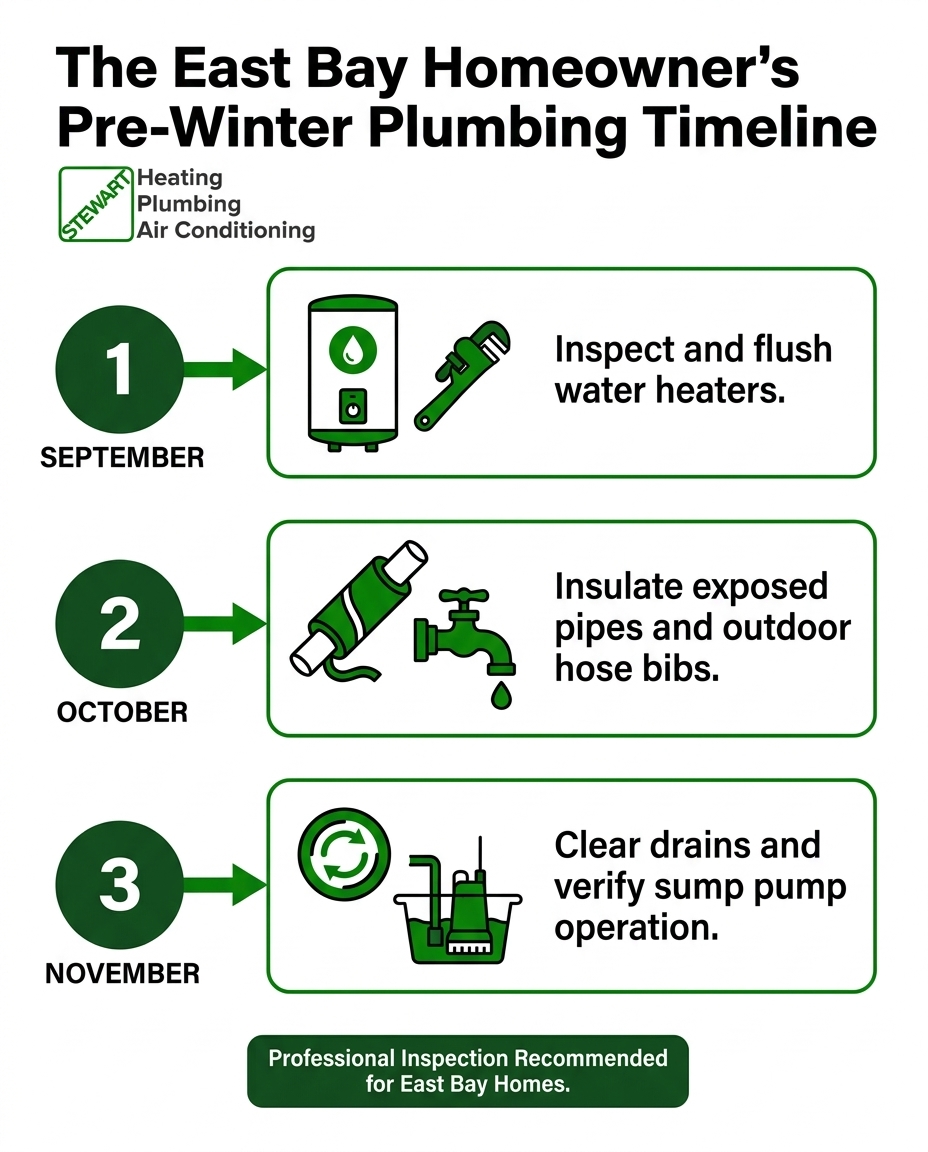
The chronological timeline begins with the most critical early-fall task: ensuring your water heater is ready for the colder months. During the September pre-heating-season transition, the temperature of the groundwater entering your home begins to drop. This means your water heater has to work significantly harder to raise that water to your desired temperature.
One local homeowner reached out last fall when their air conditioning and water heater were both overdue for service. A prompt, professional technician was able to schedule the overdue appointments and complete the necessary work smoothly, ensuring the home was fully prepared for the changing seasons. This proactive approach prevents the sudden loss of hot water on a chilly morning.
Over time, sediment builds up at the bottom of your water heater tank. This sediment acts as an insulating barrier between the heating element and the water. When groundwater temperatures drop, a sediment-filled tank struggles to keep up, leading to lukewarm showers and skyrocketing energy bills.
To maintain peak performance, you need professional water heater maintenance. A licensed technician will perform the following critical steps:
1. System Assessment: Inspecting the tank for early signs of corrosion, rust, or micro-leaks that could worsen during winter.
2. Professional Flush: Safely draining the tank to remove hardened sediment buildup without damaging the internal valves.
3. Anode Rod Inspection: Checking the sacrificial anode rod, which prevents the tank itself from rusting out.
4. Burner and Element Testing: Ensuring gas burners or electric heating elements are firing efficiently and safely.
5. Outdoor Unit Verification: For homes with outdoor or garage-based water heaters, verifying the unit has adequate weather protection.
Because opening and draining a pressurized tank involves scalding water and critical safety valves, this is not a weekend DIY project. Relying on a professional ensures the internal components remain intact and your warranty stays valid.
As we move deeper into fall, the focus shifts to protecting your exterior plumbing. While coastal Bay Area cities might stay relatively mild, microclimates like Pittsburg CA and surrounding East Bay communities face distinct overnight frost risks. Daytime temperatures might feel comfortable, but a sudden overnight dip can cause the water inside exposed pipes to freeze and expand, leading to catastrophic bursts.
The danger lies in the unpredictability. You might not notice a frozen pipe until it thaws the next morning and begins leaking into your walls or foundation. Shielding these vulnerable points before the first frost hits is non-negotiable.
A thorough assessment of your home's exterior and unconditioned spaces will reveal where your plumbing is most at risk. Have a professional verify the insulation integrity of the following areas:
• Outdoor hose bibs: Disconnect all garden hoses. Leaving a hose attached traps water in the fixture, which can freeze and crack the pipe back into the wall.
• Crawlspace plumbing: Pipes running under the house are exposed to cold drafts. Professional-grade foam insulation sleeves are required here.
• Uninsulated garage pipes: Garages often drop to near-outside temperatures overnight. Any exposed water lines or laundry hookups need heavy insulation.
• Exterior water heater lines: If your water heater sits outside, the exposed hot and cold water lines entering the unit must be wrapped tightly.
• Irrigation system backflow preventers: These above-ground valves are highly susceptible to frost damage and require specialized insulated covers.
Having a professional handle this insulation process provides peace of mind. They know exactly which materials offer the correct R-value for our specific climate, ensuring your home is shielded against unpredictable overnight freezes.
By late fall, the primary weather threat in the East Bay shifts from temperature drops to heavy precipitation. The transition into the wet winter season brings significant rainfall, making November the critical month to secure your home's drainage systems. If you follow the East Bay homeowner timeline for winter plumbing, this is when you prepare for water diversion.
Heavy seasonal rains can overwhelm a property that isn't prepared. Poor drainage doesn't just flood your yard; it threatens your home's foundation and can back up into lower-level plumbing systems.
Clearing outdoor drains is the first line of defense. Gutters and downspouts must direct water far away from the foundation. If water pools near the base of your home, it can seep into crawlspaces or basements, creating a damp environment that encourages mold and threatens structural integrity.
For homes equipped with sump pumps, November is the time for a rigorous stress test. You do not want to discover your sump pump has a seized motor during the first major downpour of the year. A professional assessment will verify that the float switch activates properly, the discharge pipe is clear of obstructions, and the check valve is functioning to prevent water from flowing back into the pit. Ensuring these systems are fully operational before the heavy rains arrive is the best way to protect your property from costly water damage.
Following a structured timeline does more than just get you through a single winter; it establishes a baseline of health for your home's entire plumbing infrastructure. Homeowners in Pittsburg CA and surrounding East Bay communities who treat maintenance as an ongoing strategy experience far fewer emergency failures.
Another local customer experienced a recurring issue last spring that needed a permanent fix to prevent future headaches. After the technician clearly explained the problem and implemented the solution, the customer felt confident enough to sign up for an ongoing maintenance contract. This kind of consistent relationship with a trusted local professional changes how you manage your home.
When you shift from reactive repairs to proactive care, you unlock several long-term benefits. Enrolling in a routine maintenance plan ensures that an expert is putting eyes on your system twice a year. This regular cadence allows technicians to catch both heating and plumbing issues early, long before they escalate into major disruptions.
• Extended equipment lifespan: Water heaters and plumbing fixtures last significantly longer when they are regularly serviced and kept free of mineral buildup.
• Improved energy efficiency: A clean, well-maintained system requires less energy to heat and distribute water, keeping your monthly utility bills manageable.
• Fewer surprise breakdowns: Catching a worn-out valve or a failing anode rod during a scheduled checkup prevents a sudden leak from ruining your weekend.
• Priority scheduling: When you are part of a maintenance program, you often receive priority service if an unexpected issue does arise during peak season.
Routine care transforms home ownership from a series of stressful surprises into a predictable, manageable process. It extends the lifespan of your critical home infrastructure and gives you lasting peace of mind.
As you work through your early fall preparation, you may discover that maintenance alone isn't enough. Identifying the signs that an aging water heater or plumbing system may not survive another winter is crucial. The September pre-heating-season transition is the ideal time to schedule major upgrades without the pressure of an emergency failure.
If your water heater is constantly requiring repairs, struggling to produce enough hot water, or showing visible signs of severe rust, replacing it now is the smartest move. Upgrading early means you can take your time selecting a high-efficiency model that perfectly fits your household's demands, rather than settling for whatever is available on the truck during a midnight emergency.
When deciding whether to repair or replace, consider the age of the unit, the frequency of recent breakdowns, and the overall efficiency of the system. Modern tankless and high-efficiency traditional water heaters offer significant performance improvements over models built just a decade ago.
Furthermore, upgrading proactively often opens the door to financial incentives. Various utility incentive programs and generic rebates may be available for qualifying high-efficiency upgrades. For instance, exploring PG&E rebates for home upgrades can help offset the initial investment of a new, energy-efficient system. We strongly advise consulting with a professional to explore current, applicable incentive programs before the cold sets in, ensuring you maximize your savings while securing your home's comfort.
Following a structured, region-specific East Bay homeowner timeline for winter plumbing is the most effective way to protect your property. By starting in September with your water heater, moving to pipe insulation in October, and securing your drainage in November, you stay ahead of unpredictable weather shifts. You do not have to tackle this heavy lifting alone. A local expert can handle the inspections, flushing, and system verifications, giving you absolute confidence that your home is ready. Schedule a professional inspection now to ensure complete readiness before the first cold snap arrives.
Do pipes freeze in the Bay Area?
Yes, pipes can and do freeze in the Bay Area, particularly in inland microclimates. While we don't see prolonged deep freezes, sudden overnight temperature drops can easily freeze exposed outdoor hose bibs and uninsulated crawlspace pipes. Taking proactive steps to insulate exterior plumbing prevents unexpected bursts and costly water damage.
When should I winterize my plumbing in California?
The ideal time to begin winterizing your plumbing is early fall, specifically September and October. Starting early ensures your water heater is flushed and your outdoor pipes are insulated before the first unpredictable overnight frost hits. Waiting until late November often means competing with emergency service calls.
How do I prepare my water heater for winter?
Preparing your water heater requires a professional inspection and a full tank flush to remove sediment buildup. As groundwater temperatures drop in the fall, sediment forces your heater to work much harder to warm the water. A professional check ensures the anode rod, valves, and heating elements are all functioning efficiently.
Why is my water heater struggling during cold nights?
Your water heater struggles during cold nights because the incoming groundwater is significantly colder, requiring more energy to heat. If your tank has heavy sediment buildup or failing heating elements, it simply cannot keep up with the increased demand. Routine maintenance clears this sediment and restores the unit's efficiency.
What are the most common winter plumbing emergencies in our region?
The most common winter emergencies include burst exterior pipes from sudden overnight frosts and failed sump pumps during heavy seasonal rains. We also frequently see water heaters failing completely because they were overworked and neglected during the fall transition. Proactive fall maintenance drastically reduces the risk of these specific emergencies.

Very professional and complete. I would recommend Stewart to anyone. Highest quality of workmanship and clean installation.
Stewart Heating Plumbing Air Conditioning just did some work for us for the first time. They did an installation at my home and it turned out well. I thought the price was fair and I definitely would use them again. The technicians were very friendly and knowledgeable about their work. I highly recommend Stewart Heating Plumbing Air Conditioning and already told friends to use them.
We have been using Stewart Heating Plumbing Air Conditioning since 1995. They put the original heating and air unit in the house, and we have just stayed with them. They are dependable and honest people, and they have done a good job for us every time that we have used them!
They came and did an inspection and are coming tomorrow to do the repair.
They replaced a regulator the first time, and then the water heater vent had to be replaced. They did great work.
The gentleman that serviced us was helpful, insightful, and knew what he was talking about. Overall, it was a great experience.