

Recent Blogs
Stay updated with our latest blog posts.

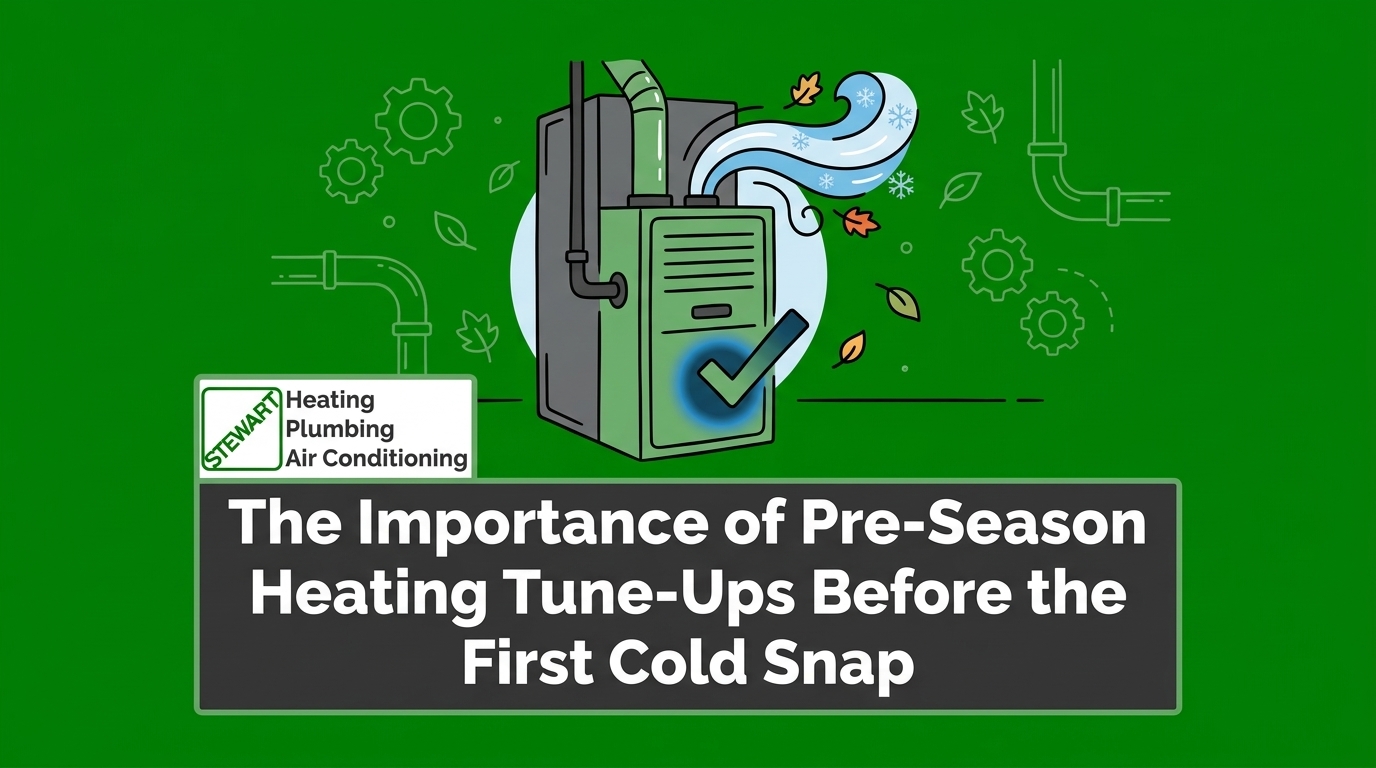
The September to October fall transition is notoriously unpredictable, making The Importance of Pre-Season Heating Tune-Ups Before the First Cold Snap a critical consideration for every homeowner. A common pattern we see is homeowners assuming their heating system will turn on flawlessly just because it worked fine at the end of last winter. However, waiting until the house is freezing to test the heating system is a significant gamble that often results in discovering a complete breakdown on the coldest night of the year.
In Contra Costa County, the local climate features rapid diurnal temperature variations. You might enjoy a warm, comfortable early fall afternoon, only to face freezing coastal winds that drop evening temperatures drastically within a matter of hours. If you wait until that sudden temperature drop to activate your thermostat, you risk a no-heat emergency right when you need warmth the most. That is why proactive heating services are so critical for maintaining a comfortable, safe home environment.
The core issue lies in how equipment responds to inactivity. Dormant forced-air furnaces and heat pumps sit idle for months during the summer. While they are turned off, they are not suspended in time; they are subjected to fluctuating humidity, airborne dust, and natural material degradation. This summer dormancy affects mechanical reliability, causing moving parts to stiffen and sensitive electronic sensors to lose their calibration. Early intervention through a pre-season inspection resets the system's baseline, ensuring that minor issues accumulated over the summer do not compound into complete system lockouts when you finally call for heat.
HVAC systems are not static objects; they degrade even when not in active use. When a furnace sits idle for an extended period, it becomes vulnerable to environmental factors that actively compromise its internal components. A typical pattern we see is homeowners noticing poor airflow, delayed ignition, or uneven heating during the first major cold front. One local homeowner reached out last fall because their system efficiency needed improvement after sitting dormant all summer. A technician thoroughly reviewed the system, explained the hidden mechanical issues causing the drag, and suggested specific efficiency measures to restore full performance. Understanding these hidden mechanical tolls is the first step in preventing them.
Airborne particulates do not stop circulating just because the furnace is off. Over the summer, dust, pet dander, and microscopic debris settle into dormant burners and coat the heat exchanger. This accumulation creates a physical barrier that interferes with optimal system function.
• Clogged burner ports: Dust and occasional spider webs can block the tiny orifices where gas is supposed to flow. This prevents proper gas distribution and can cause delayed ignition, where gas builds up before igniting with a startling "boom."
• Insulated heat exchangers: A thick layer of dust acts as an unwanted insulator on the heat exchanger, preventing it from transferring heat efficiently into the air flowing through your ductwork.
• Restored combustion: Professional cleaning removes this debris safely, restoring the precise air-to-fuel ratio required for safe, clean, and efficient combustion.
The flame sensor is a critical safety mechanism designed to detect whether a flame is actually present when the gas valve opens. If it does not detect a flame within a few seconds, it immediately shuts off the gas to prevent a dangerous buildup of unburned fuel in your home.
Over the humid summer months, the dissimilar metals in the flame sensor react to moisture in the air, developing a microscopic layer of oxidation. This thin, nearly invisible layer of rust and soot acts as an electrical insulator. When the furnace attempts to ignite in the fall, the oxidized sensor fails to detect the microamp current of the flame. The system assumes there is no fire and shuts down immediately after igniting. This is one of the most common reasons a furnace will briefly turn on, blow cold air, and turn right back off.
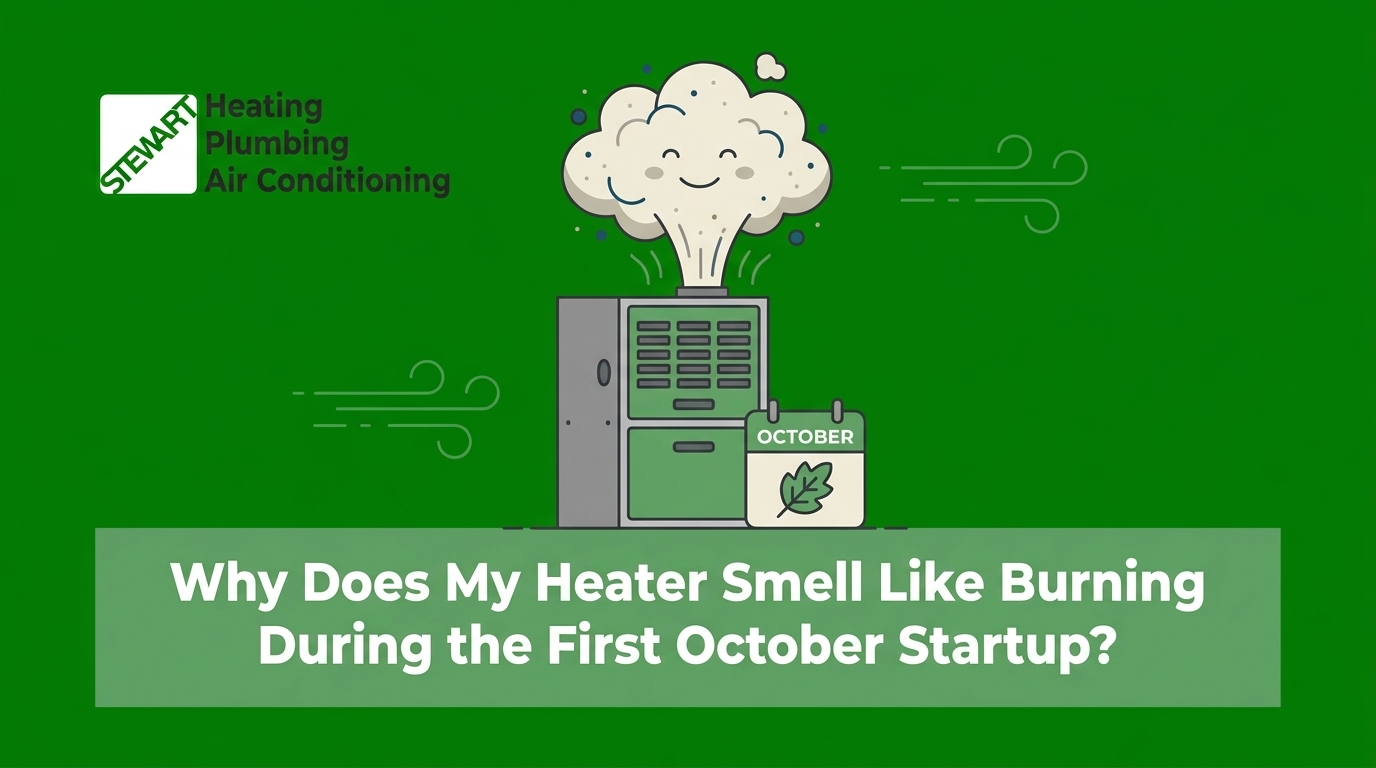
When you turn on the thermostat for the first time after a long summer, a sudden burning odor coming from the vents can be highly alarming. Most homeowners immediately worry about electrical fires or catastrophic equipment failure. However, the short answer is that a brief burning smell is typically the harmless burn-off of accumulated summer dust on the heat exchanger.
As the furnace burners ignite and the heat exchanger rapidly warms up to operating temperature, any dust, pet hair, or microscopic debris that settled on the metal surfaces over the summer is instantly incinerated. The blower motor then pushes that smell through your ductwork and into your living spaces. While this is a normal part of the seasonal transition, it is important to differentiate between a brief dust burn-off and persistent odors that indicate severe component failure.
• Odor Type — Normal Dust Burn-Off: Faint dusty, slightly singed smell. — Warning Sign of Component Failure: Sharp electrical, melting plastic, or ozone smell.
• Duration — Normal Dust Burn-Off: Lasts 10 to 30 minutes, then dissipates completely. — Warning Sign of Component Failure: Persists for hours, worsens over time, or returns every cycle.
• Visual Signs — Normal Dust Burn-Off: No visible smoke, normal airflow. — Warning Sign of Component Failure: Visible smoke from vents, system lockouts, or unusual noises.
If the smell resembles melting plastic, acrid ozone, or burning wires, turn off the system immediately at the thermostat. These odors indicate severe electrical distress, similar to the symptoms of a failing zone control board, a seized blower motor, or melting wire insulation. In these cases, professional diagnostics are required before the system can be safely operated again.
Skipping pre-season maintenance sets off a chain reaction of mechanical consequences. The most damaging of these is short-cycling—a condition where the furnace turns on and off rapidly without ever completing a full heating cycle. This erratic behavior puts immense strain on the entire system and drastically reduces energy efficiency.
Here is the mechanical breakdown of how neglected maintenance leads to short-cycling and ignition failure:
1. The Flame Sensor Fails to Register: As discussed, a dirty or oxidized flame sensor cannot detect the burner flame. The system ignites, the sensor fails to register the fire, and the safety switch shuts the gas valve down within three to four seconds. The furnace will attempt this cycle a few times before entering a hard lockout.
2. Airflow is Choked by Clogged Filters: A furnace requires a specific volume of air moving across the heat exchanger to keep the metal from overheating. If the air filter is clogged with summer dust and allergens, airflow drops dramatically.
3. The Heat Exchanger Overheats: Without enough cool air blowing across it, the heat exchanger's internal temperature spikes rapidly.
4. High-Limit Switches Trip: To prevent the heat exchanger from cracking or starting a fire, the furnace's internal high-limit safety switch detects the excessive heat and intentionally shuts the burner down. The blower fan will continue to run to cool the metal, blowing cold air into your home. Once cooled, the system tries to restart, only to overheat and shut down again moments later.
5. The Blower Motor Bears the Strain: Starting up requires significantly more electricity and mechanical torque than running continuously. Rapid short-cycling forces the blower motor to start and stop repeatedly, accelerating wear on the motor bearings and electrical capacitors.
Preventative checks reset these baselines. By cleaning the flame sensor, replacing the filter, and verifying airflow, a tune-up ensures smooth, uninterrupted operation and prevents the system from tearing itself apart through rapid cycling.
The HVAC industry operates on highly predictable seasonal rhythms. Every year, there is a massive spike in emergency no-heat calls during the first true cold snap. Homeowners who skipped preventative maintenance all turn their thermostats up on the exact same freezing evening, resulting in a flood of simultaneous breakdown reports.
Since our founding in 1974, we have spent 50 years serving the East Bay, and we see the exact same October emergency rush every single year. Waiting for a breakdown often means enduring freezing temperatures inside the home while waiting for an available technician. During these peak demand periods, dispatch boards fill up instantly, and wait times for service naturally extend. Furthermore, if a specific replacement part is required to fix your furnace, you are suddenly competing with hundreds of other regional homeowners for the same limited local supply chain inventory.
The benefits of early scheduling:
• Bypassing the queue: September maintenance allows you to secure an appointment on your own terms, completely bypassing the stressful October bottleneck.
• Unhurried inspections: Proactive scheduling means the technician has ample time to thoroughly evaluate the system without the pressure of a backlog of freezing emergency customers waiting for their arrival.
• Parts availability: If a minor component like a weak capacitor or a failing igniter is discovered during a pre-season check, it can be ordered and installed without emergency rush constraints.
A professional tune-up is not a quick visual glance; it is a rigorous, step-by-step mechanical calibration designed to restore lost efficiency and extend equipment lifespan. We frequently see the peace of mind this thorough approach provides. One local homeowner scheduled their first time having a furnace serviced for a fall tune-up. The technician explained everything done during the visit, showed the damaged items that needed proactive replacement, and even helped find optimal spots for carbon monoxide detectors and filter storage. That level of detail is standard for a proper inspection.
Critical Safety Checks:
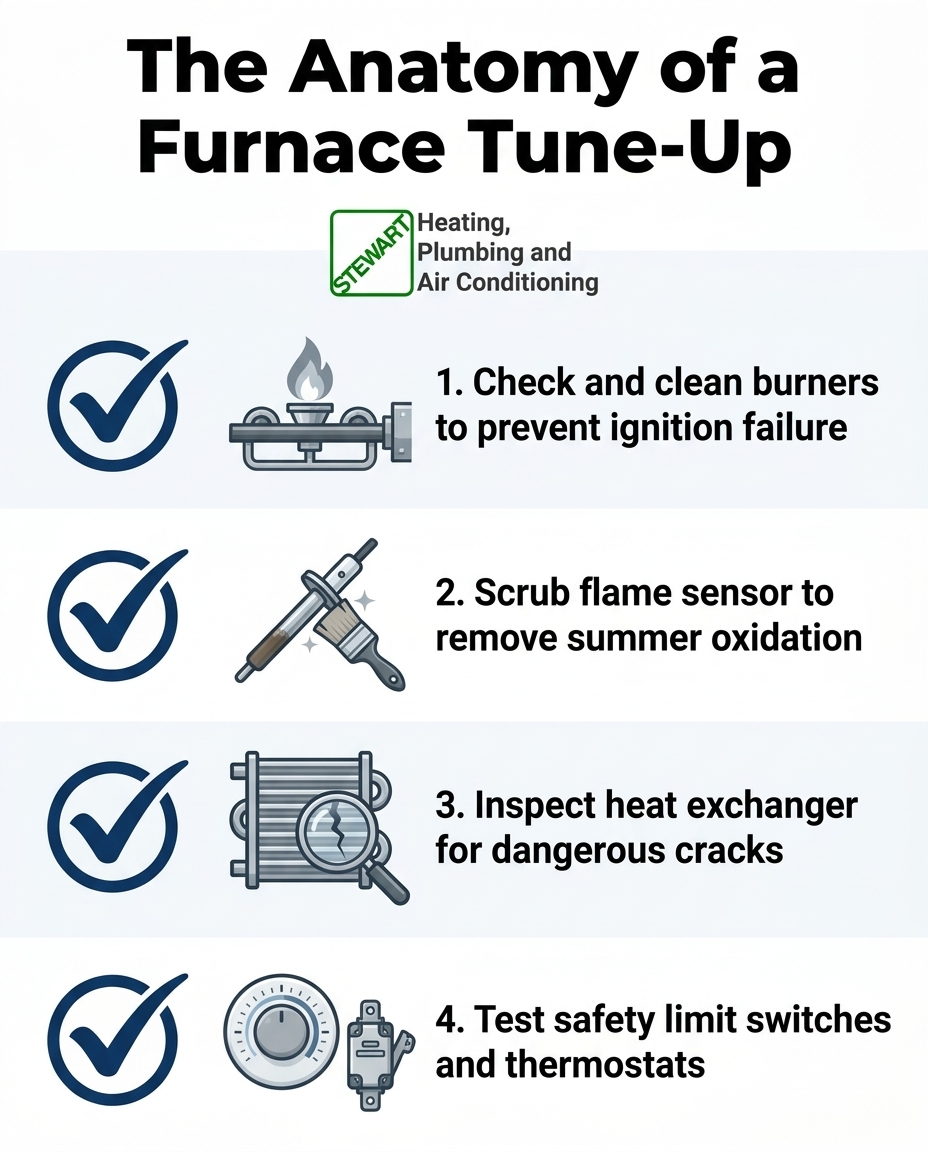
• Heat exchanger inspection: Technicians use specialized cameras to inspect the heat exchanger for microscopic cracks. A cracked heat exchanger allows deadly carbon monoxide to leak into the home's breathing air.
• Carbon monoxide testing: Ambient air is tested to ensure zero combustion gases are escaping the flue or exhaust venting.
• Safety limit calibration: High-limit switches and rollout switches are physically tested to ensure they will actually shut the system down in an emergency.
Mechanical Tune-Up Steps:
• Lubricating moving parts: Blower motor bearings and inducer fan motors are lubricated to reduce friction, lowering the electrical draw required to spin them.
• Tightening electrical connections: Vibration from normal operation slowly loosens wire terminals over time. Tightening these prevents electrical arcing and sudden power failures.
• Thermostat calibration: The thermostat is checked against ambient room temperature to ensure it is communicating accurately with the control board.
The Cleaning Phase:
• Clearing burners: Burner assemblies are brushed and vacuumed to ensure a crisp, blue, efficient flame.
• Scrubbing the flame sensor: The microscopic summer oxidation is gently sanded off the flame sensor rod to restore its conductivity.
• Airflow verification: Filters are checked, and static pressure is measured to ensure the blower is pushing the correct volume of air.
These precise steps collectively restore the system's baseline operation. This is why securing an HVAC maintenance agreement is the most dependable method for keeping your heating equipment running safely year after year.
Late summer to early fall—specifically September—is the ideal window to schedule your tune-up before the first freeze. Scheduling during this period allows you to beat the October emergency rush. It also ensures that if any replacement parts are needed, there is plenty of time to order and install them before freezing temperatures arrive.
Yes, an annual inspection is critical for preventing dangerous carbon monoxide leaks and ensuring efficient operation. Beyond safety and comfort, regular maintenance is often required by manufacturers to keep equipment warranties valid. Skipping these inspections can leave you financially responsible for major component failures that would have otherwise been covered.
Skipping maintenance leads to reduced energy efficiency, higher monthly utility bills, and a significantly increased risk of sudden breakdowns during peak winter. Dust accumulation causes the system to run hotter and longer to achieve the same temperature. Over time, this added stress accelerates wear and tear, shortening the overall lifespan of the heating equipment.
Test the system on a mild day in early fall, rather than waiting for the first freezing night. By turning the thermostat up a few degrees on a weekend afternoon in September, you can safely observe the ignition process and smell the normal dust burn-off. If the system fails to start or makes unusual noises, you have ample time to address the issue.
Absolutely. Severe airflow restriction from a clogged filter causes the heat exchanger to overheat rapidly. When the internal temperatures exceed safe operating limits, the furnace's high-limit safety switch will intentionally shut the system down. Changing your filter regularly is the single most important step in preventing overheating lockouts.
A dormant heating system needs careful preparation before it can handle the intense, daily demands of winter weather. The mechanical toll of sitting idle for months—from oxidized flame sensors to dusty burners—creates hidden vulnerabilities that only become apparent when the temperature suddenly plummets. By addressing these issues proactively, you eliminate the stress of wondering if your home will stay warm.
There is immense peace of mind that comes from knowing your system will ignite safely on the first try, operate at peak efficiency, and keep your family comfortable without interruption. Explore the benefits of a professional HVAC maintenance plan to stay ahead of the seasonal rush. Taking action now ensures your home is ready long before the first cold snap arrives.

Very professional and complete. I would recommend Stewart to anyone. Highest quality of workmanship and clean installation.
Stewart Heating Plumbing Air Conditioning just did some work for us for the first time. They did an installation at my home and it turned out well. I thought the price was fair and I definitely would use them again. The technicians were very friendly and knowledgeable about their work. I highly recommend Stewart Heating Plumbing Air Conditioning and already told friends to use them.
We have been using Stewart Heating Plumbing Air Conditioning since 1995. They put the original heating and air unit in the house, and we have just stayed with them. They are dependable and honest people, and they have done a good job for us every time that we have used them!
They came and did an inspection and are coming tomorrow to do the repair.
They replaced a regulator the first time, and then the water heater vent had to be replaced. They did great work.
The gentleman that serviced us was helpful, insightful, and knew what he was talking about. Overall, it was a great experience.