

Recent Blogs
Stay updated with our latest blog posts.

A widespread myth in residential HVAC is that all modern heating systems deliver the exact same type of warmth, but when diving into options comparisons for homeowners, you will quickly discover that system architecture dictates almost everything about your indoor comfort. At Stewart Heating, Plumbing and Air Conditioning, our team frequently hears property owners assume that replacing a failing heater is simply a matter of swapping out an old metal box for a new one. In reality, the technology you select fundamentally changes how your home consumes energy, distributes air, and responds to temperature drops.
As you prepare for a mid-fall / October heating startup, the window to evaluate these technologies is critical. Making a rushed decision right as freezing temperatures arrive often leads to installing whatever equipment is immediately available rather than what is genuinely best for your property's long-term efficiency. The two primary contenders dominating modern residential heating are the traditional gas furnace and the electric air-source heat pump. Each system approaches the task of warming your living space in entirely different ways.
Preparing your home for the colder months often involves comprehensive mechanical checks across the board. While evaluating your options comparisons for homeowners regarding HVAC, it is also an ideal time to review water heater services to ensure your entire property is ready for winter demands.
To make an informed choice, it is essential to look past the thermostat and understand exactly what happens inside the equipment. Since 1974, our team at Stewart Heating, Plumbing and Air Conditioning has helped families navigate these upgrades, allowing us to break down these systems with objective, technical accuracy. The fundamental difference between a furnace and a heat pump comes down to a single principle: creating heat versus moving heat.
Traditional gas furnaces rely on combustion. They consume a fossil fuel to generate original thermal energy, which is then pushed through the ductwork. Conversely, electric heat pumps utilize a sophisticated heat transfer process. Even when it feels cold outside in Pittsburgh CA, ambient thermal energy still exists in the air. A heat pump captures this existing energy, concentrates it, and moves it indoors.
• Core Mechanism — Traditional Gas Furnace: Fuel combustion (creating heat) — Electric Air-Source Heat Pump: Refrigerant cycle (moving heat)
• Energy Source — Traditional Gas Furnace: Natural gas or liquid propane — Electric Air-Source Heat Pump: Electricity
• Functionality — Traditional Gas Furnace: Heating only — Electric Air-Source Heat Pump: Heating and cooling (reversible)
• Air Delivery Temperature — Traditional Gas Furnace: Very high (often 120°F+) — Electric Air-Source Heat Pump: Moderate and steady (around 95°F - 105°F)
The operation of a gas furnace is a strictly sequential process designed around safe, controlled combustion. When the thermostat signals a call for heat, the system initiates a specific cycle:
• The Draft Inducer: A fan turns on to clear the heat exchanger of any residual gases, ensuring a safe environment for ignition.
• Ignition and Burners: The gas valve opens, and an electronic igniter (or pilot light in older models) lights the burners.
• The Heat Exchanger: The flames heat up a series of metal tubes or plates known as the heat exchanger. This component is critical because it keeps the toxic combustion gases completely separate from the air you breathe.
• The Blower Motor: Once the heat exchanger reaches the proper temperature, the main blower fan activates, pushing return air over the hot metal. The air absorbs the heat and is distributed throughout the home.
• Safe Exhaust: The harmful byproducts of combustion, including carbon monoxide, are safely vented out of the home through a dedicated flue pipe.
An electric heat pump operates using the exact same principles as a refrigerator or an air conditioner, but with the ability to reverse the flow of refrigerant. It does not burn fuel to create warmth; it acts as a thermal elevator.
• The Compressor: Located in the outdoor unit, the compressor pressurizes the chemical refrigerant, raising its temperature significantly.
• Refrigerant Lines: The superheated refrigerant travels through copper lines to the indoor coil.
• Heat Transfer: The indoor blower fan pushes air across the hot indoor coil. The refrigerant releases its absorbed heat into the air, warming the home.
• The Reversing Valve: This is the defining component of a heat pump. In the summer, the reversing valve switches direction, allowing the system to absorb heat from inside the house and dump it outside, providing full central air conditioning.
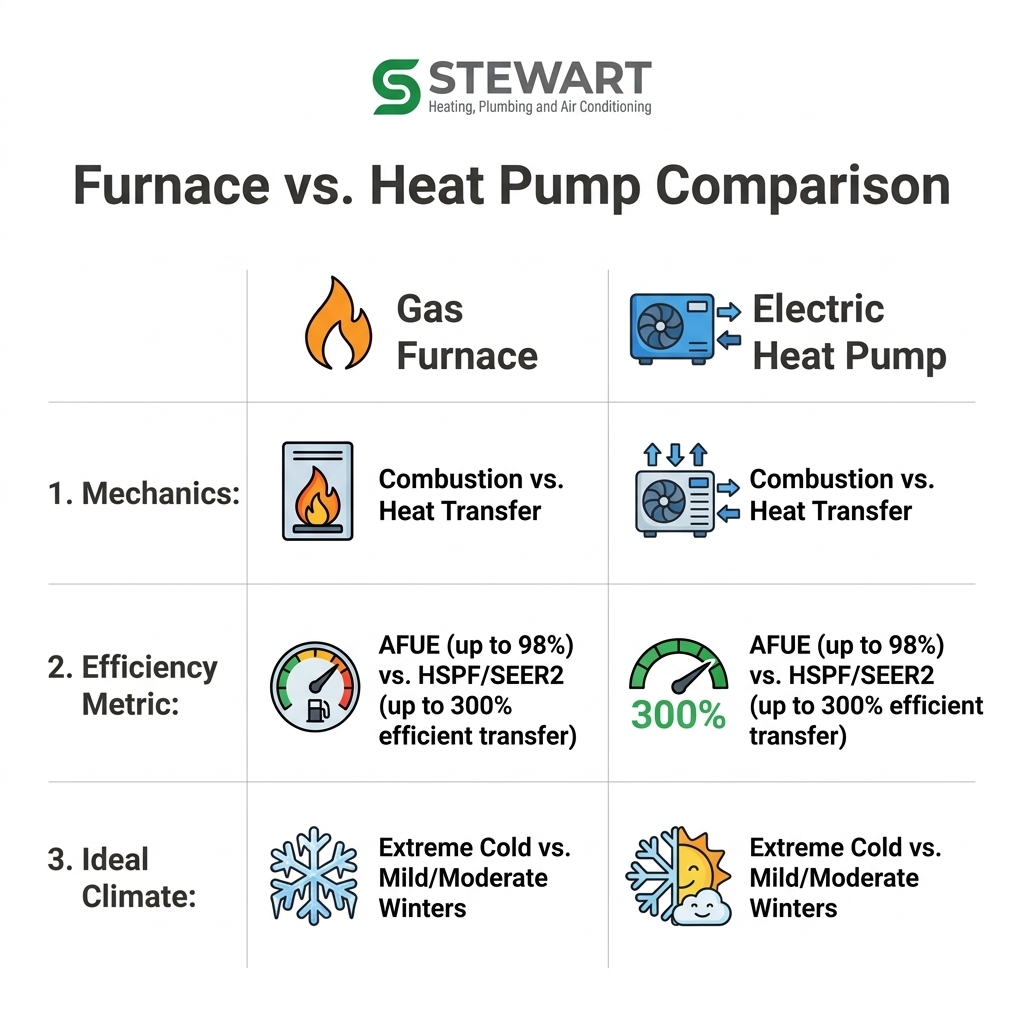
When comparing heating systems during a mid-fall / October heating startup, understanding how efficiency is measured is just as important as understanding the mechanics. Because furnaces and heat pumps operate so differently, they use distinct rating systems to quantify their energy consumption.
AFUE (Annual Fuel Utilization Efficiency) is the standard measurement for gas furnaces. It represents the percentage of fuel that is successfully converted into usable heat for your home. For example, a standard mid-efficiency furnace might have an AFUE rating of 80%. This means that 80% of the natural gas consumed becomes heat, while the remaining 20% escapes out the exhaust flue as waste gas. Modern, high-efficiency condensing furnaces can achieve AFUE ratings of up to 98%, meaning they waste virtually no fuel. However, because a furnace creates heat, it can never exceed 100% efficiency.
HSPF (Heating Seasonal Performance Factor) and the updated HSPF2 are the metrics used to measure the heating efficiency of air-source heat pumps. This rating calculates the total space heating required during the season divided by the total electrical energy consumed by the system. Because heat pumps move heat rather than generating it from scratch, they operate under entirely different mathematical rules.
Under optimal conditions, an electric heat pump can transfer up to 300% more thermal energy into a home than the electrical energy it consumes to run the compressor. This high coefficient of performance is why heat pumps are heavily favored in modern energy efficiency discussions. (They are also rated in SEER2 for their cooling efficiency during the summer months). Evaluating these metrics closely before winter sets in ensures you select a system that aligns with your long-term utility management goals.
The single biggest factor in choosing between a furnace and a heat pump is the regional climate. Because a heat pump extracts thermal energy from the outdoor air, its efficiency is heavily influenced by the ambient outdoor temperature. When the air outside gets colder, there is less heat available to extract, and the compressor has to work harder to warm the home.
This is where local geography plays a massive role. In regions experiencing harsh, sub-zero winters, standard heat pumps struggle to maintain indoor comfort without relying heavily on secondary electric resistance heat strips, which consume significant amounts of electricity. In those extreme climates, dual-fuel systems (a heat pump paired with a gas furnace) or standalone high-efficiency gas furnaces are often required.
However, in our decades of serving Pittsburgh CA, we've found our much milder climate, with average winter lows typically hovering in the 40s (Fahrenheit), to be highly optimal for electric heat pump efficiency. At 40 degrees, there is an abundance of thermal energy in the outside air for the refrigerant to absorb. A heat pump operating in this environment will run at peak efficiency, providing steady, consistent warmth without the need to burn natural gas.
Climate impacts all mechanical systems in a home, not just the HVAC unit. The ambient temperature of incoming municipal water, for instance, affects how hard your plumbing systems have to work, which is detailed further in resources like a Pittsburg water heater repair guide. Understanding your specific local climate is the key to sizing and selecting the right equipment.
Beyond mechanical operation and climate suitability, the shift toward residential electrification is heavily influencing homeowner choices during a mid-fall / October heating startup. Traditional gas furnaces rely on direct fossil fuel combustion, which inherently carries a larger carbon footprint on a localized level. Electric heat pumps produce zero direct emissions at the property, making them a cornerstone technology for homeowners looking to reduce their environmental impact.
Because of this push toward higher efficiency and reduced carbon emissions, there are often generic federal tax credits and local utility rebates that may apply to qualifying high-efficiency heat pump installations under current energy initiatives. These programs are designed to offset the initial installation costs of upgrading to higher-tier equipment.
Homeowners are strongly advised to consult with a tax professional or their local utility provider to verify current generic programs, eligibility requirements, and equipment standards before making a final purchase. Upgrading home efficiency is a holistic process that can also involve residential plumbing solutions and weatherization, ensuring the whole home operates sustainably and retains the heat your new system produces.
When finalizing your options comparisons for homeowners, evaluating the ongoing upkeep required for both system types helps clarify the total lifecycle commitment. Neither a furnace nor a heat pump is a "set it and forget it" appliance; both require professional oversight to reach their maximum expected lifespans safely.
Gas Furnace Maintenance Needs:
• Heat Exchanger Inspections: The most critical safety check. A cracked heat exchanger can leak carbon monoxide into the living space.
• Burner Cleaning: Ensuring the gas burners are free of soot and debris for clean, efficient combustion.
• Flue and Ventilation Checks: Verifying that exhaust gases are venting properly without obstruction.
• Ignition System Testing: Calibrating the flame sensor and igniter to prevent intermittent heating failures.
Electric Heat Pump Maintenance Needs:
• Refrigerant Level Checks: A heat pump must have the precise chemical charge to absorb and release heat efficiently. Leaks will severely degrade performance.
• Coil Cleaning: Both the indoor and outdoor coils must be kept clean to facilitate proper heat transfer.
• Reversing Valve Testing: Ensuring the mechanical valve shifts smoothly between heating and cooling modes.
• Defrost Cycle Verification: Checking the sensors that prevent the outdoor unit from turning into a block of ice during cold, damp weather.
One crucial distinction our technicians regularly explain to homeowners in Pittsburgh CA is that a heat pump operates year-round, serving as your air conditioner in the summer and your heater in the winter. Because it accumulates double the run-time of a standalone furnace, a pattern we see often is that it requires more frequent check-ups. Regardless of which architecture you choose, enrolling in a preventative maintenance plan is the most effective way to protect the lifespan of your investment.
The better choice depends entirely on your local climate, existing infrastructure, and long-term energy goals. Electric heat pumps excel in mild climates where winter temperatures rarely drop below freezing for extended periods, offering incredibly efficient heat transfer. Conversely, gas furnaces provide rapid, high-temperature heat that is highly reliable in extreme cold and sub-zero environments.
Traditional heat pumps begin to lose their peak efficiency as outdoor temperatures drop into the 20s or 30s (Fahrenheit). While modern cold-climate heat pumps are engineered to operate effectively even below freezing, standard units will eventually need to activate supplemental electric heat strips to maintain indoor comfort when ambient thermal energy becomes scarce.
The primary difference lies in their mechanical operation: heat pumps utilize an electrical heat transfer process, while furnaces rely on fossil fuel combustion. Functionally, a heat pump is a reversible system that provides both heating in the winter and cooling in the summer, whereas a gas furnace is a dedicated heating appliance that must be paired with a separate air conditioner for summer cooling.
To choose between the two, evaluate your local winter temperature averages, current utility rates for gas versus electricity, and the condition of your existing ductwork. You should also consider your long-term carbon reduction goals and consult with a professional to see if potential tax incentives apply to high-efficiency equipment in your area.
Electric heat pumps are generally much more efficient for mild winters. Because they move existing ambient heat rather than consuming fuel to create original heat, they can output significantly more thermal energy than the electrical energy they consume, making them highly cost-effective in moderate climates.
Often yes, provided the existing ductwork is properly sized, tightly sealed, and in good structural condition. However, because heat pumps deliver a higher volume of air at a slightly lower temperature than a gas furnace, a professional evaluation and load calculation is required to ensure proper airflow and prevent comfort issues.
Ultimately, the choice between a traditional gas furnace and an electric heat pump comes down to evaluating system architecture against your local climate needs. Whether you prioritize the high-heat output of combustion or the year-round efficiency of heat transfer, understanding the technical differences ensures that your mid-fall / October heating startup results in long-term comfort.
Our team knows firsthand that a clear, technically accurate options comparisons for homeowners helps eliminate the guesswork, but every property we visit in Pittsburgh CA has unique thermal dynamics. Before finalizing your decision, we encourage you to seek a professional evaluation to ensure your ductwork, insulation, and electrical capacity align with your chosen equipment. If you are preparing your home for the changing seasons, you can request professional plumbing service or schedule an HVAC diagnostic to ensure all your home systems operate flawlessly when winter arrives.

Very professional and complete. I would recommend Stewart to anyone. Highest quality of workmanship and clean installation.
Stewart Heating Plumbing Air Conditioning just did some work for us for the first time. They did an installation at my home and it turned out well. I thought the price was fair and I definitely would use them again. The technicians were very friendly and knowledgeable about their work. I highly recommend Stewart Heating Plumbing Air Conditioning and already told friends to use them.
We have been using Stewart Heating Plumbing Air Conditioning since 1995. They put the original heating and air unit in the house, and we have just stayed with them. They are dependable and honest people, and they have done a good job for us every time that we have used them!
They came and did an inspection and are coming tomorrow to do the repair.
They replaced a regulator the first time, and then the water heater vent had to be replaced. They did great work.
The gentleman that serviced us was helpful, insightful, and knew what he was talking about. Overall, it was a great experience.