

Recent Blogs
Stay updated with our latest blog posts.

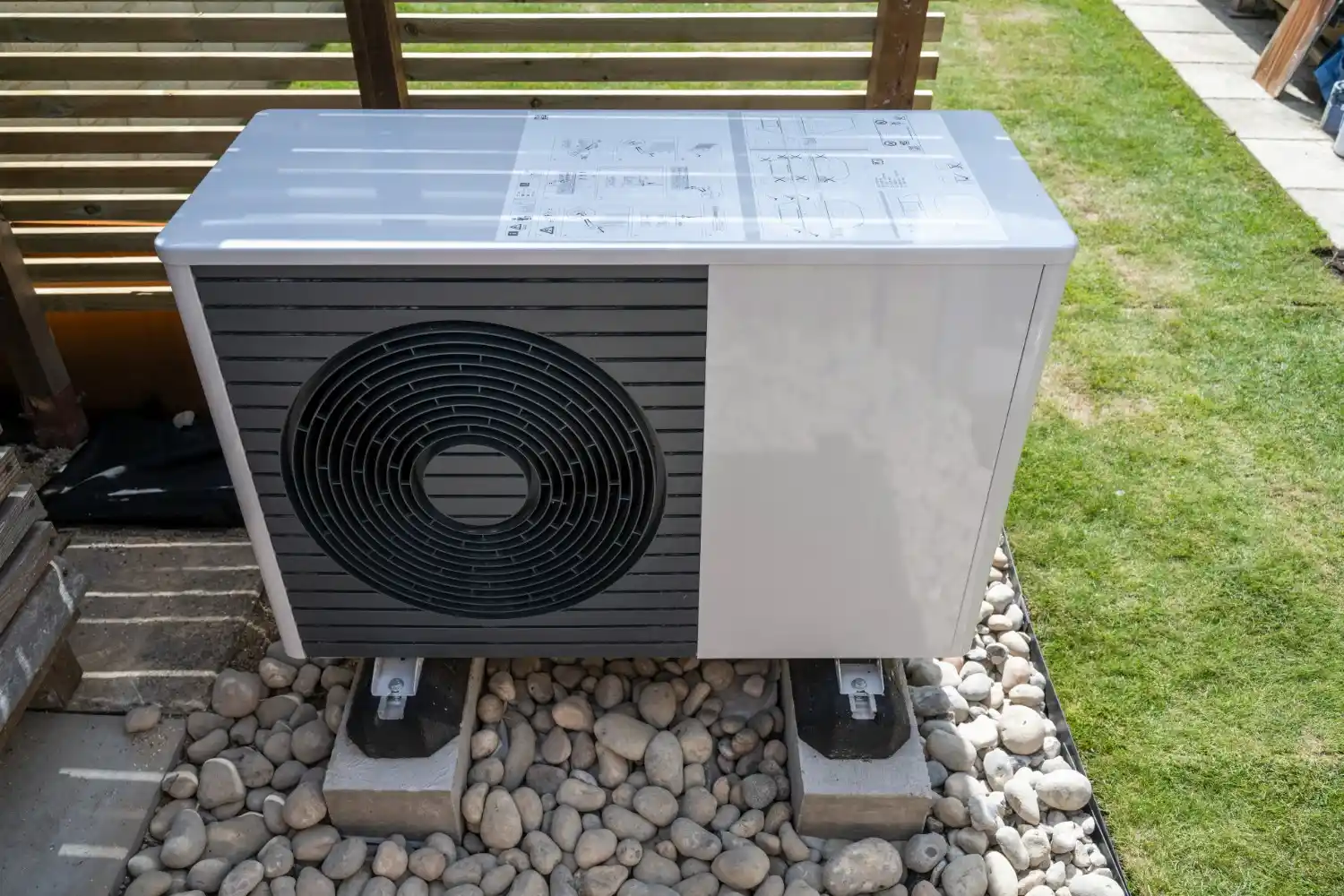
Knowing how to apply for energy rebates in California is one of the smartest moves a homeowner in Contra Costa County can make right now. Between rising energy costs and the expense of replacing aging HVAC and plumbing systems, the financial pressure is real. The good news: federal, state, and local programs have made thousands of dollars in rebates available to qualifying homeowners — but only if you follow the right steps.
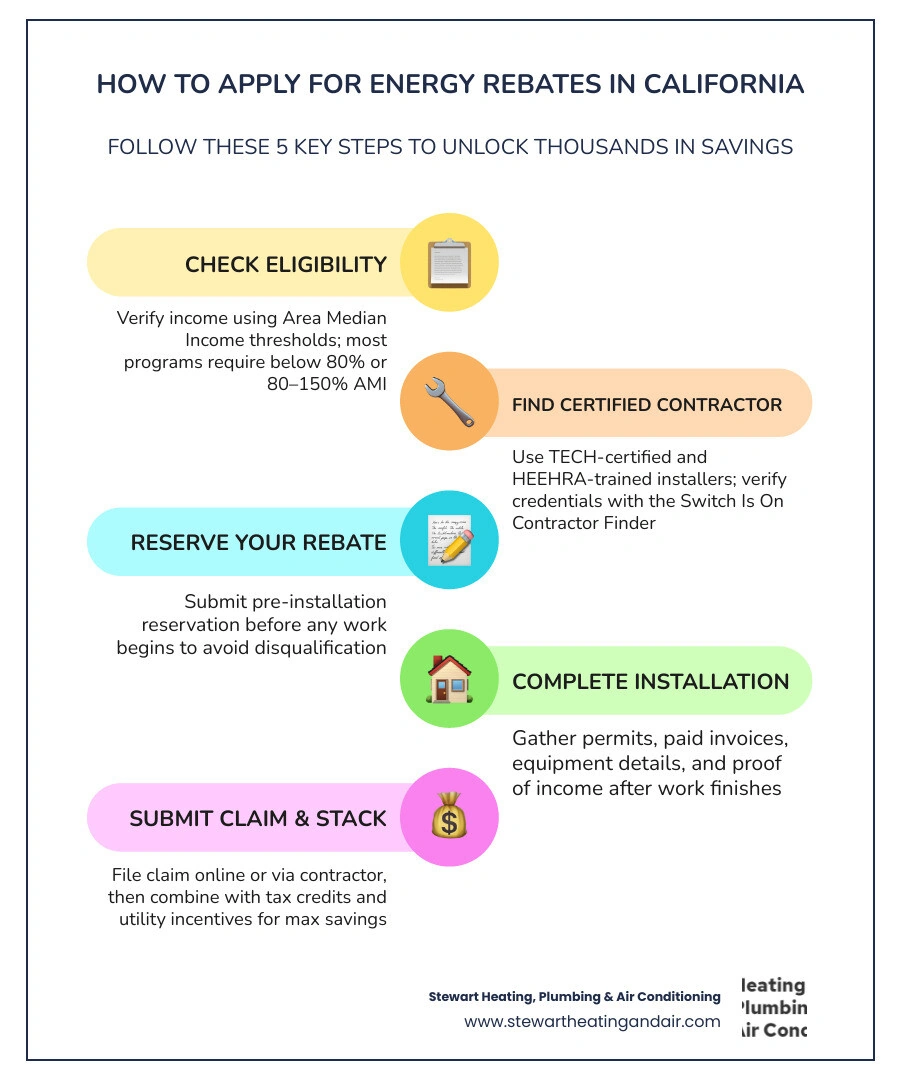
Here is a quick overview of how to apply:
The programs available right now include the federally funded HEEHRA rebates (up to $8,000 for qualifying heat pump systems), Silicon Valley Clean Energy home rebates (up to $13,000), PG&E incentives, and the California Energy Savings Assistance Program for income-qualified households. Each program has its own rules, deadlines, and funding limits — and some, like the HEEHRA single-family program, already have waitlists as of early 2026.
This guide walks you through every step so you do not miss out.
Navigating the application process for home energy incentives can feel a bit like learning a new language. However, once you break it down into a logical sequence, securing your funding becomes highly manageable.
To set yourself up for success, we always recommend looking at your home as a complete system. Before you buy any equipment, it is incredibly beneficial to schedule Home Energy Audits for your property. An audit pinpoints where your home is losing conditioned air and helps you identify the most impactful upgrades. You can easily Schedule an Energy Audit with our team to establish a clear roadmap for your efficiency goals.
Once you have a plan, follow these essential steps to apply for your rebates.
Most major incentive programs in California, particularly those funded by the federal government, are designed to support low-to-moderate-income households. Eligibility is often determined by your household's Area Median Income (AMI).
Additionally, if you are currently enrolled in utility assistance programs like CARE (California Alternative Rates for Energy) or FERA (Family Electric Rate Assistance), you may qualify for streamlined categorical eligibility. To ensure you select systems that meet the stringent requirements of these programs, it helps to have Efficiency Ratings Explained for Homeowners so you know exactly which SEER2, HSPF2, or UEF ratings your new units must achieve.
You cannot simply hire any contractor if you want to claim state or federal rebates. Programs like TECH Clean California and the Home Electrification and Appliance Rebates (HEEHRA) mandate that all installations be completed by TECH-certified, HEEHRA-trained contractors.
Working with a certified professional guarantees that the installation meets strict quality assurance guidelines. It also ensures that the system is properly sized for your space. Understanding How Proper HVAC Sizing Affects Comfort and Efficiency is critical; an oversized or undersized system will run inefficiently, wear out prematurely, and likely fail to qualify for high-tier incentives. Certified professionals will always perform detailed load calculations to determine the perfect system size for your home.
One of the most common mistakes homeowners make is installing equipment first and trying to apply for rebates afterward. In California, almost all major rebate programs require a pre-installation reservation.
If upfront costs are a concern while you wait for your rebate check to arrive, we offer flexible Air Conditioning Heating Financing options to help bridge the gap and keep your project moving forward smoothly.
To maximize your savings, you need to understand which programs are active and how they operate in our local service areas, including Concord, Walnut Creek, Pittsburg, and Antioch. Below is an overview of the primary programs available to California residents.
For a comprehensive look at the specific heating and cooling incentives available in our area, refer to our guide on California Energy Rebates for HVAC Upgrades.
| Program Name | Funding Source | Target Audience | Key Eligible Upgrades | Maximum Rebate Amount |
|---|---|---|---|---|
| HEEHRA (Phase I) | Federal (IRA) | Low-to-moderate-income households | Heat pump HVAC, heat pump water heaters, panel upgrades | Up to $8,000 for HVAC; up to $14,000 total |
| TECH Clean California | State of California | All residents (with higher tiers for low-income) | Heat pump HVAC, heat pump water heaters | Varies by region and utility |
| PG&E Rebates | Local Utility | PG&E customers in Contra Costa County | Smart thermostats, backup generators, electric panel upgrades | Varies (e.g., $300 for portable generator backup) |
The Inflation Reduction Act (IRA) allocated $590 million to California for Home Energy Rebates. This allocation is split between two primary programs:
If you are considering switching to a heat pump, you might wonder if they perform well in our local climate. Our detailed analysis on Are Heat Pumps Ideal for Mediterranean Climates explains why these systems are incredibly well-suited for the Bay Area's weather. If you live in Brentwood or the surrounding areas, installing an Energy Efficient Heat Pump Brentwood CA is an excellent way to lower your carbon footprint while preparing your home for future incentive rounds.
State-level programs work alongside federal initiatives to make clean energy more accessible:
For those of us living in Contra Costa County, the local utility structures offer similar opportunities to save. Embracing these technologies provides massive Heat Pump Benefits for Bay Area Homeowners, including lower monthly operating costs, superior indoor air quality, and quieter operation.
One of the best secrets to affordable home upgrades is "stacking" — the practice of combining federal, state, and local utility incentives for the same project. When done correctly, stacking can offset a significant portion of your total project costs.
Upgrading your home’s systems is not just about immediate savings; it is a long-term financial strategy. Discover why a Why HVAC Replacement is a Smart Investment and explore the many New HVAC Benefits Beyond Comfort, such as increased property value and reduced emergency repair costs.
While state and utility rebates provide direct cash back or point-of-sale discounts, the federal government offers robust tax incentives through the Energy Efficient Home Improvement Credit (Section 25C).
Under Section 25C, homeowners can claim a tax credit of 30% of the total installation cost, up to $2,000 per year, for qualifying ENERGY STAR certified heat pumps and heat pump water heaters.
Here is how you can stack these programs:
To help manage any remaining out-of-pocket costs, you can explore our various HVAC Financing Options to find a payment plan that fits your household budget. It is also wise to look at a Standard Efficiency vs High Efficiency HVAC Comparison to determine which system tier offers the best balance of upfront rebates and long-term utility savings.
Once your new high-efficiency system is installed, protecting your investment is key. We highly recommend signing up for a Maintenance Plan or securing an HVAC Maintenance Agreement. If you are wondering, Is an HVAC Maintenance Plan Worth It, the answer is a resounding yes — regular service keeps your system running at peak efficiency, preserves your manufacturer warranty, and ensures you continue to save money year after year.
To learn more about what to expect during a service call, check out our guide on What Does an HVAC Maintenance Visit Include and read our Annual HVAC Maintenance Guide 2026 to keep your home comfortable in every season.
As of February 24, 2026, the HEEHRA Phase I single-family residential rebates are fully reserved across California. Any new single-family reservation requests are automatically placed on a waitlist. However, multifamily HEEHRA rebate processing continues for qualifying properties, and planning is underway for future phases of federal funding.
Generally, no. Most major programs, including HEEHRA and TECH Clean California, require an approved reservation before any installation work begins. Retroactive applications are typically rejected. The main exceptions are emergency replacements (such as a water heater bursting in the middle of winter). For emergency situations, contractors must follow specific emergency protocols and contact program administrators immediately before starting work.
To protect yourself from scams, only work with contractors listed on the official Switch Is On Contractor Finder. Never provide your financial or bank account information to unverified third parties claiming they can secure rebates for you. When verifying your income, only use secure, official program portals. Your contractor will only need your official income verification approval code or PDF to reserve your rebate — they should never ask for your tax returns or social security number directly.
Taking advantage of energy rebates is an incredible way to upgrade your home's comfort, lower your monthly utility bills, and do your part for the environment. While the application rules, income limits, and waitlists can seem complicated, working with the right partner makes the entire process simple and stress-free.
At Stewart Heating, Plumbing & Air Conditioning, we have spent decades helping homeowners throughout Contra Costa County — including Pittsburg, Antioch, Concord, Brentwood, Walnut Creek, and Pleasant Hill — navigate home comfort upgrades. We take pride in doing the job right the first time, ensuring your new systems are perfectly sized, fully permitted, and qualified for every possible rebate.
Ready to make your home more comfortable and efficient? Explore our Home Energy Efficiency Upgrades services, and let us help you maximize your savings today!

Very professional and complete. I would recommend Stewart to anyone. Highest quality of workmanship and clean installation.
Stewart Heating Plumbing Air Conditioning just did some work for us for the first time. They did an installation at my home and it turned out well. I thought the price was fair and I definitely would use them again. The technicians were very friendly and knowledgeable about their work. I highly recommend Stewart Heating Plumbing Air Conditioning and already told friends to use them.
We have been using Stewart Heating Plumbing Air Conditioning since 1995. They put the original heating and air unit in the house, and we have just stayed with them. They are dependable and honest people, and they have done a good job for us every time that we have used them!
They came and did an inspection and are coming tomorrow to do the repair.
They replaced a regulator the first time, and then the water heater vent had to be replaced. They did great work.
The gentleman that serviced us was helpful, insightful, and knew what he was talking about. Overall, it was a great experience.