

Recent Blogs
Stay updated with our latest blog posts.

Are you looking for common homeowner questions answered because you just switched your thermostat to "heat" for the first time this season and immediately noticed a strong, alarming burning odor coming from your vents? You are not alone. That sudden singed smell can cause immediate anxiety, prompting many people to rush to the thermostat and shut the system down in fear of an electrical fire.
While residential heating equipment requires respect and caution, not all odors indicate a dangerous emergency. As a full-service home comfort provider handling everything from professional plumbing services to complex HVAC diagnostics, our team at Stewart Heating, Plumbing and Air Conditioning fields this specific question constantly during mid-fall heating startup.
October brings a unique set of challenges to a house. While some homeowners are proactively scheduling water heater repair and replacement this time of year to prepare for the cold, addressing a sudden, acrid furnace smell is usually the immediate priority on that first chilly morning. Understanding what causes this odor, how long it should last, and when to actually worry is the key to safely navigating the seasonal transition.
To understand why your heater smells like it is burning, you have to look at what the system has been doing for the past six months: absolutely nothing. Furnaces sit completely idle for months during the warmer spring and summer seasons. During this long downtime, the internal components become a resting place for airborne debris.
When our technicians are out on service calls in Pittsburg, CA, we see exactly how our mild but damp autumns affect local homes. Heating systems often sit idle for extended periods, leading to significant dust accumulation long before that first October cold snap arrives. Household dust, pet dander, lint, and microscopic airborne particulates naturally settle directly on the furnace's heat exchanger and burners.
The heat exchanger is the core component of your furnace. It is a series of metal coils or tubes that get incredibly hot to warm the air passing over them. Here is exactly what happens during a mid-fall heating startup:
• The ignition sequence begins: The thermostat calls for heat, and the burners ignite inside the heat exchanger.
• Rapid temperature increase: The metal surface of the heat exchanger heats up to hundreds of degrees within seconds.
• Instant incineration: The thin layer of settled dust and dander resting on the metal is instantly incinerated by the high heat.
• Odor distribution: The blower motor kicks on, pushing the newly warmed air—along with the smell of the incinerated dust—through your ductwork and into your living spaces.
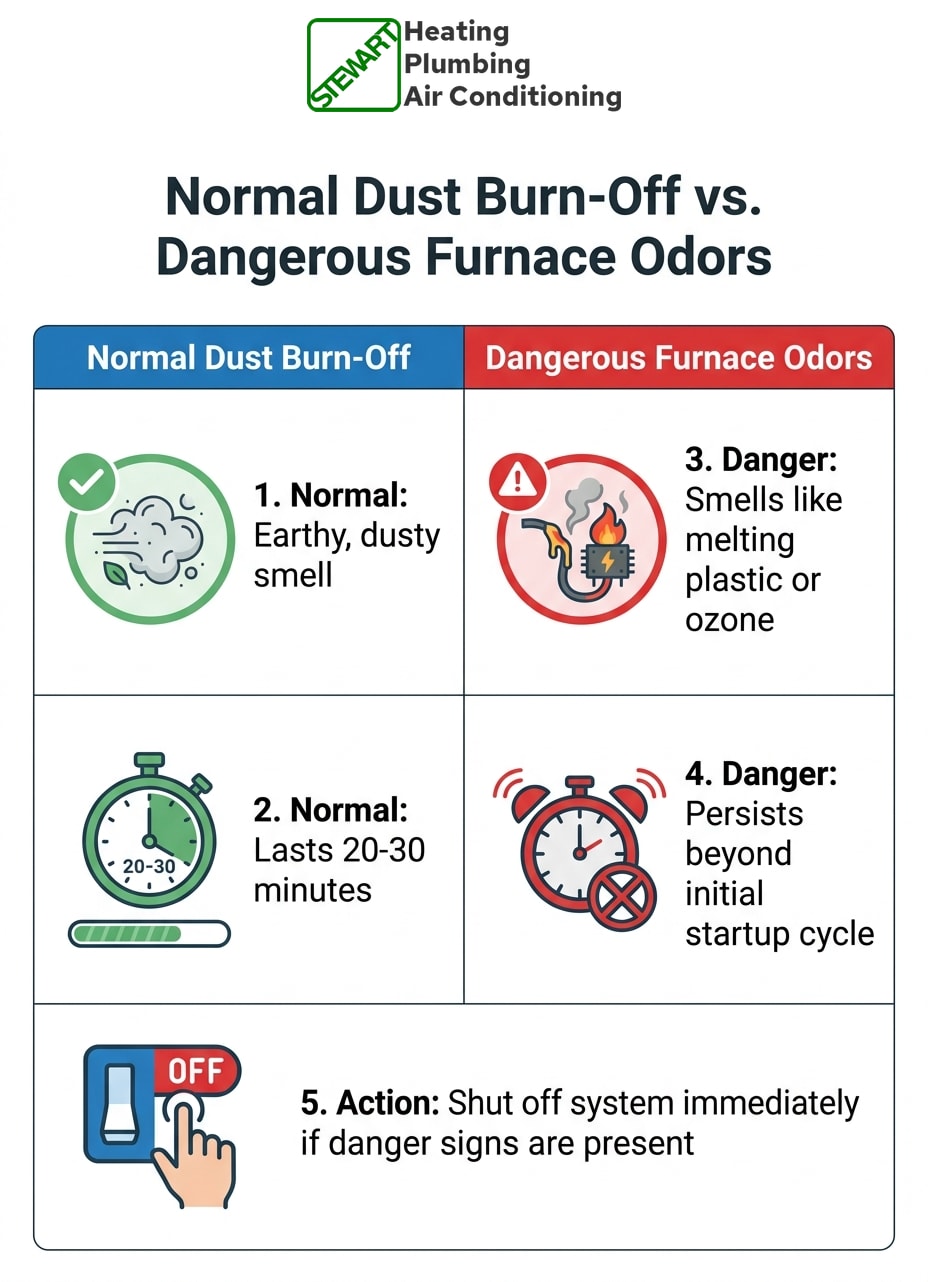
This physical process produces a very distinct, earthy, slightly singed odor. It is a normal, expected part of the seasonal transition and simply indicates that your system is clearing off the summer's accumulation of debris.
While the smell of burning dust is normal, it should never be a permanent feature of your home's indoor air quality. Providing clear, reassuring timeframes is essential for knowing whether your system is operating safely or if it requires immediate intervention.
The odor should be strictly temporary. In a properly functioning furnace, the smell of burning dust should completely dissipate within 20-30 minutes of initial run time. Once that initial layer of settled particulates is burned away, the metal surfaces of the heat exchanger are clean, and the odor will stop generating.
To help manage the indoor air quality during this brief window, you can take a few proactive steps:
• Open a few windows: Cross-ventilation helps clear the incinerated particulates out of your home faster.
• Run ceiling fans: Keep the air circulating to prevent the odor from settling in specific rooms.
• Monitor the vents: Pay attention to the airflow. The smell should be strongest in the first five minutes and steadily decrease.
If the smell persists beyond 20-30 minutes of initial run time, or if it grows stronger instead of fading, the situation has moved past a normal seasonal burn-off. At that point, the system should be turned off immediately at the thermostat until a professional can evaluate it.
Distinguishing between harmless settled dust burning off and critical warning signs is a vital homeowner skill. In our decades of diagnosing HVAC issues, we've found that while dust smells earthy and dry, dangerous odors have a harsh, chemical, or sharp profile that should never be ignored.
If a component is actively failing, melting, or overheating, the smell will be distinctly different from normal dust incineration. Identifying the smell of burning plastic or ozone is a clear sign of electrical component failure, a seized blower motor, or melting wire insulation. A persistent smoky smell or visible smoke is an immediate, severe hazard.
• Earthy, dry, or slightly singed — Likely Cause: Normal dust burn-off on the heat exchanger — Required Action: Monitor; should fade within 20-30 minutes.
• Melting plastic or rubber — Likely Cause: Overheating wires, failing capacitor, or seized motor — Required Action: Shut off system immediately; call for service.
• Sharp, metallic, or "ozone" smell — Likely Cause: Electrical short or failing circuit board — Required Action: Shut off system immediately; call for service.
• Rotten eggs or sulfur — Likely Cause: Natural gas leak — Required Action: Evacuate home, call gas company and 911.
The critical rule: If the smell is electrical, smells like plastic, or lasts longer than the normal window, turn off the thermostat immediately. Do not attempt DIY repairs on electrical or combustion systems, as this poses a severe risk of fire or electric shock.
A mid-fall heating startup is the perfect reminder to evaluate all of your home comfort systems. Seasonal transitions do not just affect your furnace; they impact the entire mechanical infrastructure of your house. As the weather cools, the demands on both your HVAC and plumbing networks shift dramatically.
For example, dropping inlet water temperatures force water heaters to work much harder during autumn. When the ground gets cold, the municipal water entering your home is significantly colder than it was in July. Your water heater must burn more fuel or use more electricity to raise that cold water to your preferred shower temperature, putting extra strain on aging elements and gas valves.
HVAC and plumbing systems both face increased strain as temperatures drop. Proactive checks prevent mid-winter emergencies when repair schedules are packed and weather conditions are harsh. Taking advantage of plumbing repair specials right now ensures that your pipes, fixtures, and water heating equipment are fully prepared for cooler weather.
As a local, family-owned business serving Contra Costa County since 1974, our plumbers and HVAC technicians know firsthand how quickly a minor autumn issue can turn into a major winter disruption. That is why we highly encourage homeowners to schedule plumbing service alongside their seasonal HVAC checks for complete, whole-home peace of mind. Getting a reliable, expert diagnostic evaluation across all your home systems ensures you aren't caught off guard when the heavy rains and cold nights arrive.
While a brief dust burn-off is normal, you do not have to just suffer through a foul-smelling house every October. There are several actionable, safe preventative measures you can take to minimize these odors before initiating your mid-fall heating startup.
1. Change the HVAC air filter before the first heating cycle. A clogged, dirty air filter severely restricts airflow through the system. When airflow is restricted, the heat exchanger runs hotter than it should, which can worsen odors and put unnecessary stress on the system. Starting the season with a fresh filter ensures proper ventilation.
2. Keep the area surrounding the furnace completely clear. Over the summer, it is easy to stack boxes, store holiday decorations, or leave cleaning supplies near the furnace in the garage or utility closet. Ensure there is a minimum of three feet of clearance around the entire unit to prevent fire hazards and ensure the system can draw in enough air.
3. Schedule professional pre-season maintenance. Our Stewart Heating technicians always recommend having a professional clean and inspect the system before you turn it on. Technicians have the specialized tools to safely access the burner compartment and clean the heat exchanger, removing the bulk of the settled dust before it ever has a chance to burn.
Complex home systems require professional oversight. Just as you might rely on a licensed expert for diagnosing a tripped pressure switch on a tankless water heater, professional furnace maintenance prevents unexpected safety lockouts and ensures your heating equipment operates safely all winter long.
It is typically the incineration of dust that settled on the heat exchanger during the summer. When the furnace ignites for the first time in months, the high heat instantly burns off this accumulated debris, creating a distinct, earthy odor that circulates through your vents.
The odor should completely resolve within 20-30 minutes of initial run time. If the smell continues past this window, or if it grows significantly stronger, it indicates a problem beyond normal dust burn-off, and the system should be turned off.
A brief dust smell during the first startup of the season is not dangerous. However, persistent odors or smells resembling burning plastic, melting wires, or electrical ozone indicate a serious hazard that requires immediate professional attention.
It smells sharply of melting plastic, ozone, or burning metal, which is very distinct from the dry, earthy smell of burning dust. If you detect these sharp, chemical odors, it often points to a failing blower motor, a burnt capacitor, or melting wire insulation.
No. Accessing and cleaning the heat exchanger requires specialized tools and training; it must be done by a licensed professional. Attempting to dismantle the burner compartment or clean the delicate heat exchanger yourself can result in severe damage to the unit or create dangerous combustion hazards.
Turning on your heating system for the first time should bring warmth and comfort to your home, not stress and anxiety. While a brief, earthy odor is a completely normal part of mid-fall heating startup, your safety and peace of mind are always paramount. If you ever feel unsure about an odor, it is always better to err on the side of caution.
Remember, if the smell lasts longer than the standard 20-30 minutes of initial run time, or if you detect any hint of melting plastic or electrical ozone, professional help is necessary. Do not wait for a minor electrical issue to become a major winter breakdown. Schedule a comprehensive inspection today to ensure your system is operating safely, efficiently, and cleanly for the long winter ahead. Additionally, if an inspection reveals that it is time to upgrade an older, inefficient system, generic federal tax credits or local utility incentive programs may apply to qualifying heat pump installations—be sure to verify current programs with your utility provider or a tax professional.

Very professional and complete. I would recommend Stewart to anyone. Highest quality of workmanship and clean installation.
Stewart Heating Plumbing Air Conditioning just did some work for us for the first time. They did an installation at my home and it turned out well. I thought the price was fair and I definitely would use them again. The technicians were very friendly and knowledgeable about their work. I highly recommend Stewart Heating Plumbing Air Conditioning and already told friends to use them.
We have been using Stewart Heating Plumbing Air Conditioning since 1995. They put the original heating and air unit in the house, and we have just stayed with them. They are dependable and honest people, and they have done a good job for us every time that we have used them!
They came and did an inspection and are coming tomorrow to do the repair.
They replaced a regulator the first time, and then the water heater vent had to be replaced. They did great work.
The gentleman that serviced us was helpful, insightful, and knew what he was talking about. Overall, it was a great experience.