

Recent Blogs
Stay updated with our latest blog posts.

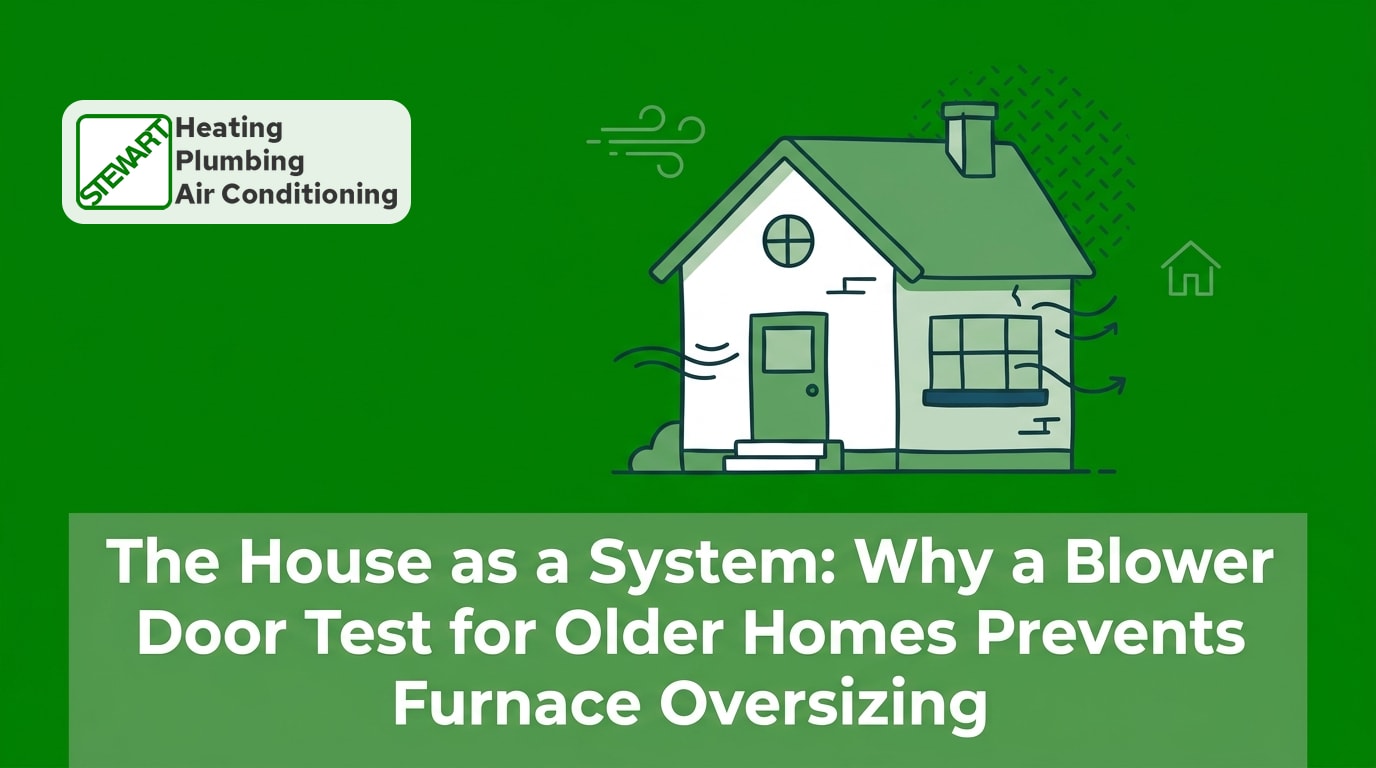
Your furnace is struggling to keep up with the dropping temperatures, and certain rooms in your house never seem to warm up. You might assume that installing a brand-new heating system is the ultimate fix, but skipping a blower door test for older homes can turn a simple upgrade into a very expensive mistake. At Stewart Heating, Plumbing and Air Conditioning, our team frequently sees homeowners rush to replace failing heating systems without realizing their home's thermal envelope is the actual root cause of those stubborn cold spots.
To truly understand where your heat is going, exploring home energy audits is the best first step before finalizing any equipment purchases.
Installing a high-efficiency furnace in a drafty property guarantees that newly heated air will immediately escape through unsealed gaps in your attic, walls, and foundation. Think of it like trying to fill a bucket with a hole in the bottom—buying a bigger hose does not fix the leak. The building envelope acts as the physical barrier between your conditioned indoor air and the harsh outdoor elements. When this barrier is compromised, even the most advanced heating equipment will fail to keep you comfortable.
Making the decision to perform a diagnostic test before finalizing your furnace sizing is the only way to ensure the new equipment matches the home's actual thermal needs. Addressing these foundational issues is a priority we always stress, especially during a pre-winter November assessment, before the heavy heating demands of the season arrive and force your system to run continuously.
If you want to stop guessing about your home's efficiency, you can schedule an energy audit to get hard data on your building's performance. A blower door test is the cornerstone of this process, utilizing specialized equipment to measure exactly how airtight your house is.
The diagnostic process involves mounting a powerful, calibrated fan into an adjustable frame, which is temporarily sealed into an exterior door frame. This setup is designed to pull air out of the house, creating a pressure difference between the indoors and outdoors. This depressurization forces outside air to rush back in through every unsealed crack, gap, and poorly insulated area in the building.
Our technicians use this controlled environment to pinpoint exact locations of energy loss that are otherwise invisible to the naked eye. The testing process generally follows these structured steps:
1. Sealing the perimeter: The technician installs a flexible canvas and aluminum frame into your front or back door, ensuring a tight seal.
2. Establishing a baseline: All exterior doors and windows are closed, while interior doors remain open to allow air to flow freely through the house.
3. Depressurizing the space: The calibrated fan is turned on, pulling indoor air outside until a specific pressure target (usually 50 Pascals) is reached.
4. Tracking the drafts: As outside air forces its way back in, technicians use smoke pencils or infrared cameras to visually identify hidden leaks around baseboards, window frames, and attic hatches.
5. Recording the data: Digital manometers connected to the fan calculate the exact volume of air moving through the leaks.
Historical properties and aging architecture are particularly susceptible to these hidden envelope failures. When evaluating older homes in Pittsburgh CA, our technicians frequently discover significant air leaks in areas that homeowners never suspected, such as recessed lighting fixtures and plumbing penetrations.
The primary metric generated by this diagnostic tool is Air Changes per Hour (ACH). This number quantifies exactly how much air leaks out of the home and is replaced by outdoor air every hour under testing conditions.
Knowing the precise ACH is a mandatory metric for scientific HVAC load calculations. A high ACH indicates a very leaky home, meaning a significant amount of heat is escaping. Without this exact measurement, any attempt to size a new furnace is based on assumptions rather than architectural reality.
A home is not just a collection of separate parts; it is an interactive system where the walls, roof, insulation, and HVAC equipment all impact one another. This concept, known as "the house as a system," is fundamental to achieving true indoor comfort and energy efficiency.
Since 1974, our team's whole-home philosophy at Stewart Heating has emphasized that true comfort requires assessing the envelope first rather than just swapping metal boxes in the basement or attic. When the envelope is compromised, the mechanical equipment is forced to overcompensate, leading to uneven temperatures, higher utility bills, and accelerated wear and tear.
Properties built before modern weatherization standards require a comprehensive diagnostic approach. To understand the difference between standard replacements and a system-based approach, consider the following comparison:
• Equipment Sizing — Traditional Box Swapping: Based on the square footage of the home or matching the old unit's size. — Whole-Home System Approach: Based on precise load calculations and blower door test data.
• Comfort Issues — Traditional Box Swapping: Assumes a newer, bigger furnace will automatically fix cold spots. — Whole-Home System Approach: Identifies and seals the specific drafts causing the cold spots first.
• Energy Efficiency — Traditional Box Swapping: Relies solely on the AFUE rating of the new furnace. — Whole-Home System Approach: Maximizes efficiency by preventing the heated air from escaping the building.
• Long-Term Value — Traditional Box Swapping: Often leads to premature equipment failure due to overworking. — Whole-Home System Approach: Extends equipment lifespan by ensuring it operates under ideal conditions.
Ethical HVAC replacement requires assessing this entire system first. In our decades of working on older homes in Pittsburgh CA, we've found that treating the house as an interconnected environment prevents the costly cycle of installing expensive equipment that ultimately underperforms due to a failing thermal boundary.
The Problem: Without hard data from a blower door test, we often see contractors guess the heating load and intentionally oversize the furnace "just in case." They assume that a drafty older home requires a massive amount of heat to stay warm, so they install the largest unit available to avoid customer complaints about cold rooms.
The Cause: An oversized furnace blasts the home with heat rapidly, satisfying the central thermostat long before the system has time to properly circulate air to distant rooms. This rapid on-and-off behavior is known as short-cycling. Because the thermostat is located in a central hallway, it registers the sudden burst of heat and shuts the system down, leaving bedrooms and additions freezing cold.
Short-cycling drastically increases wear and tear on the blower motor and heat exchanger. Heating systems use the most energy and endure the most mechanical stress during the startup phase. When a furnace turns on and off constantly, it undergoes repetitive thermal expansion and contraction, which can eventually crack the heat exchanger.
The Solution: Proper diagnostics prevent homeowners from paying a premium for massive equipment they do not actually need. By testing the envelope, our team can identify the leaks, recommend sealing them, and install a correctly sized furnace that runs in long, gentle cycles. Additionally, checking the ductwork with a duct leakage test ensures that the air your new furnace produces actually makes it to your living spaces.
Short-cycling also prevents the system from running long enough to properly condition the air, leaving homes feeling clammy or damp. If you are scheduling a pre-winter November assessment, identifying these issues early is the best way to prevent a season of uncomfortable, uneven heating.

A Manual J Residential Load Calculation is the strict industry standard for determining exactly how many British Thermal Units (BTUs) a home requires for heating and cooling. Created by the Air Conditioning Contractors of America (ACCA), this calculation takes into account dozens of variables, including your home's square footage, window types, insulation levels, and orientation to the sun.
However, the calculation relies heavily on the home's airtightness. Assuming a default leakage rate for aging architecture almost always skews the results. Many older homes in Pittsburgh CA feature unique architectural details, varied building materials, and decades of settling that make standard assumptions wildly inaccurate.
By plugging the exact Air Changes per Hour (ACH) from a blower door test directly into the Manual J software, our technicians calculate the precise heating load. This removes all the guesswork from the equation.
Why precise data matters:
• Prevents overpaying: You avoid the higher upfront costs associated with unnecessarily large heating units.
• Ensures proper airflow: Correctly sized equipment pushes air through the ductwork at the optimal velocity to reach every room.
• Protects the heat exchanger: Long, steady heating cycles prevent the rapid temperature fluctuations that cause metal fatigue.
This data-driven approach ensures the new furnace is sized to run efficiently. Instead of a massive unit that blasts heat and shuts off, a correctly sized unit operates smoothly, maintaining a consistent, comfortable temperature throughout the entire house.
Even the highest-efficiency furnace cannot deliver on its Annual Fuel Utilization Efficiency (AFUE) rating if the heat it generates is constantly sucked out of unsealed gaps. If you purchase a 95% AFUE furnace, it is designed to convert 95% of its fuel into usable heat. But if your home's envelope is leaking 30% of that air outside, your actual operational efficiency plummets.
In our experience servicing East Bay homes, we see how the damp, chilly winter weather easily penetrates poorly insulated older properties, making temperature regulation highly inefficient without proper envelope sealing. Damp air feels colder against the skin than dry air at the same temperature. When a leaky envelope allows outdoor moisture to infiltrate the home, your furnace has to work even harder to overcome that damp chill.
Skipping diagnostics means homeowners effectively pay to heat the neighborhood rather than their living spaces. The heat rises into the attic and escapes through the roof, creating a vacuum that pulls more freezing air in through the basement or crawlspace.
Sealing the specific leaks identified during depressurization allows homeowners to purchase a smaller, more affordable furnace that uses less energy. Investing in home energy efficiency upgrades directly translates to lower utility consumption.
A well-sealed envelope also dramatically improves indoor air quality. By blocking outdoor pollutants, allergens, and dampness from entering during a pre-winter November cold snap, you create a healthier, more comfortable indoor environment for your family.
The ideal time to assess a home's envelope is before relying heavily on a heating system for daily comfort. If you wait until your furnace breaks down in the middle of a freeze, you will be forced to make a rushed decision, often resulting in an oversized replacement unit.
Identifying and sealing leaks takes time, meaning diagnostics should be scheduled well ahead of freezing temperatures. A pre-winter November assessment provides a clear baseline, ensuring any subsequent HVAC upgrades are based on the home's improved, sealed condition.
Your pre-winter preparation timeline:
• Schedule the diagnostic: Have a professional perform the depressurization test to locate hidden drafts.
• Seal the envelope: Use caulking, weatherstripping, and targeted insulation to close the gaps identified by the test.
• Evaluate the ductwork: Insulating older homes often requires sealing leaky ducts that run through unconditioned spaces like attics or crawlspaces.
• Run the Manual J: Calculate the new, lower heating load based on the sealed envelope.
• Install the equipment: Have a licensed technician select and install a perfectly sized furnace that matches the updated data.
Federal tax credits and utility incentive programs often reward comprehensive energy efficiency improvements, including envelope sealing and high-efficiency equipment installation. While homeowners should verify current offerings with their utility provider or a tax professional, these generic financial incentives make data-driven upgrades highly beneficial.
Yes, testing is highly beneficial for aging properties because they typically have the highest rates of hidden air leakage. A blower door test reveals exactly where conditioned air is escaping, allowing you to seal those specific gaps. By addressing these leaks, you can drastically reduce your heating load, lower your energy consumption, and eliminate persistent cold drafts.
The test provides a precise measurement of your home's airtightness, quantified as Air Changes per Hour (ACH). It also pinpoints the exact locations of thermal bypasses, such as unsealed attic hatches, leaky window frames, and gaps around plumbing penetrations. When evaluating older homes in Pittsburgh CA, this data is critical for understanding why the property struggles to maintain a consistent temperature.
Testing the envelope is necessary because a new furnace must be sized according to the home's actual heat loss. If you skip the test and assume a default leakage rate, contractors will likely install an oversized unit that short-cycles and wears out prematurely. Gathering hard data ensures the new equipment is perfectly matched to the home's thermal boundary.
A diagnostic test is not a pass-or-fail exam; it is a measurement tool used to establish a baseline for improvements. To achieve a better (lower) score, homeowners must seal the hidden leaks identified during the depressurization process. Upgrading weatherstripping, caulking exterior penetrations, and adding targeted insulation will significantly reduce the home's air leakage rate.
Absolutely, because the data gathered during the test dictates the size of the furnace you purchase. Short-cycling occurs when a furnace is too large for the space, causing it to heat the central rooms too quickly and shut off before circulating air to the rest of the house. By using diagnostic data to install a smaller, correctly sized unit, the system will run in long, efficient cycles.
Manual J calculations rely on accurate inputs to determine a home's heating and cooling loads. The most critical variable in that equation is the infiltration rate, or how much outside air leaks into the home. Building envelope testing replaces guessed infiltration rates with exact measurements, ensuring the final load calculation is scientifically accurate.
A new furnace is only as effective as the home's thermal envelope. Upgrading your heating equipment without first addressing the physical boundary of your house is a recipe for wasted energy and persistent cold spots. Treating your property as an interconnected system ensures that every component works together to maintain a comfortable indoor environment.
Proper diagnostics prevent the expensive mistake of installing oversized equipment that short-cycles and wears out prematurely. By prioritizing a pre-winter November assessment, you can gather the hard data needed to make informed decisions. Encourage yourself to prioritize a blower door test to ensure your upcoming heating upgrades deliver reliable, efficient comfort for years to come.

Very professional and complete. I would recommend Stewart to anyone. Highest quality of workmanship and clean installation.
Stewart Heating Plumbing Air Conditioning just did some work for us for the first time. They did an installation at my home and it turned out well. I thought the price was fair and I definitely would use them again. The technicians were very friendly and knowledgeable about their work. I highly recommend Stewart Heating Plumbing Air Conditioning and already told friends to use them.
We have been using Stewart Heating Plumbing Air Conditioning since 1995. They put the original heating and air unit in the house, and we have just stayed with them. They are dependable and honest people, and they have done a good job for us every time that we have used them!
They came and did an inspection and are coming tomorrow to do the repair.
They replaced a regulator the first time, and then the water heater vent had to be replaced. They did great work.
The gentleman that serviced us was helpful, insightful, and knew what he was talking about. Overall, it was a great experience.