

Recent Blogs
Stay updated with our latest blog posts.

Late fall weather shifts quickly, making maximizing heat pump efficiency in winter a critical priority before the dropping temperatures settle in for good. At Stewart Heating, Plumbing and Air Conditioning, we've helped Pittsburgh CA homeowners prep their homes for winter for decades, and we know exactly what happens when that first major temperature drop arrives. Many homeowners discover their heating systems are suddenly struggling to maintain a comfortable indoor climate. Your unit might run longer than usual, make unfamiliar noises, or fail to reach the temperature set on the thermostat. These early warning signs indicate that your system needs attention before the weather worsens.
The transition into winter forces your heating equipment to work significantly harder. Our primary goal right now is helping you identify which safe, effective adjustments you can make yourself, and knowing exactly when a situation requires our professional intervention. Taking a few proactive steps today prevents unnecessary energy waste and keeps your system running smoothly through the toughest weather.
Whether you need comprehensive heating services or targeted heat pump installation and service, preparing your system now prevents emergency breakdowns during unpredictable November cold snaps.
To get the most out of your heating system, it helps to understand how it operates when the weather turns cold and damp. Unlike traditional furnaces that generate heat by burning fuel, heat pumps are designed to transfer ambient heat from the outside air into your home. They remain highly efficient at this process even when outdoor temperatures drop down into the 30s and 40s.
However, the specific climate in your region plays a massive role in how the equipment performs. In our experience servicing the Pittsburgh CA and Contra Costa County areas, we know winter low temperatures frequently hover in the damp 30s and 40s. This specific combination of high humidity and dropping temperatures causes frost buildup on outdoor coils rapidly. Because of this local weather pattern, moisture management becomes far more critical than preparing for a dry, deep freeze.
During these damp November cold snaps, your system faces unique operational challenges. You will likely hear different noises and notice longer running cycles than you do in the summer or early fall. These systems are specifically engineered to handle chilly, damp weather without immediately relying on backup heating elements. Understanding the difference between normal winter operation and a struggling system is the first step toward better efficiency.
• Dry Autumn (50s) — System Behavior: Short, quiet cycles. Rapid heating. — Efficiency Impact: Maximum efficiency. Minimal energy used.
• Damp Winter (30s/40s) — System Behavior: Longer cycles. Frost management required. — Efficiency Impact: High efficiency, provided airflow is clear.
• Extreme Freeze (Under 30) — System Behavior: Continuous running. Backup heat may engage. — Efficiency Impact: Lower efficiency. Higher energy consumption.
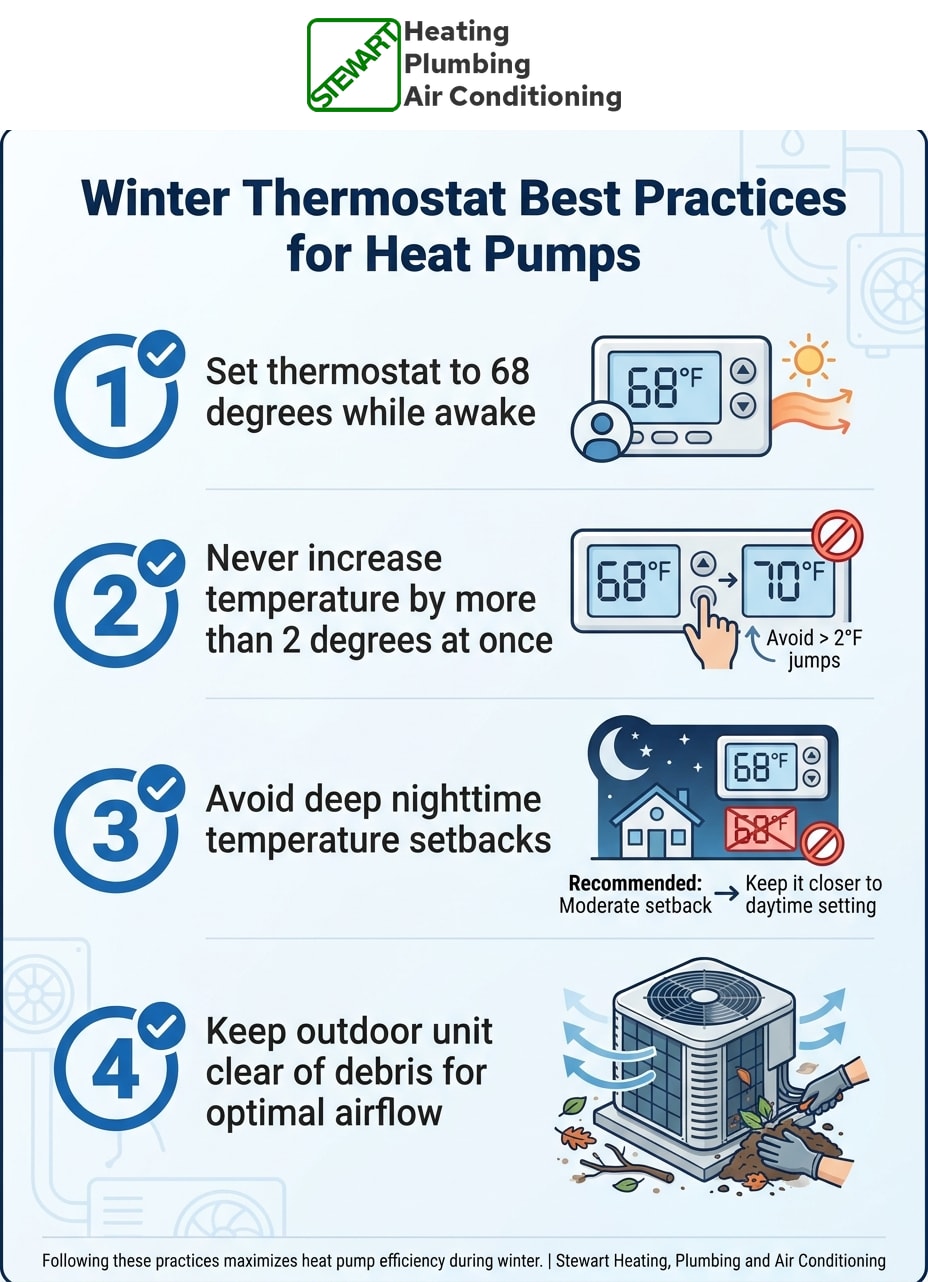
Your thermostat habits dictate how efficiently your system runs. The U.S. Department of Energy recommends setting your winter thermostat to 68 degrees while you are awake. This temperature balances personal comfort with optimal energy usage, reducing the rate at which your home loses heat to the outside environment.
A pattern we see often on winter service calls is homeowners mistakenly believing that dropping the temperature drastically at night or while away at work will save energy. While this works for traditional gas furnaces, it often backfires with heat pumps. Maintaining a steady, consistent temperature is far more efficient than utilizing aggressive nighttime setbacks. When you force the system to recover from a deep temperature drop, you risk causing unnecessary auxiliary heat triggers.
1. Find your baseline: Set the thermostat to 68 degrees and leave it there for 24 hours to see how the house feels.
2. Dress for the season: Wear layers indoors rather than constantly adjusting the dial up and down.
3. Avoid deep setbacks: If you must lower the temperature at night, drop it by no more than two degrees.
4. Plan for efficiency: Consider exploring home energy efficiency upgrades to help your home retain the heat your system produces.
The mechanical danger: The most common mistake our technicians see homeowners make is "cranking up" the heat multiple degrees at once. If you walk into a chilly house and push the thermostat from 62 degrees to 70 degrees, the system interprets that large gap as a heating emergency.
The efficient approach: We always advise our customers to never increase the thermostat by more than two degrees at a time. Gradual adjustments allow the primary compressor to handle the heating load efficiently. Sudden, large temperature demands force the system into an inefficient backup mode, relying on electric resistance strips that consume massive amounts of electricity.
The Problem: Every November, our dispatchers field panicked calls from homeowners who look out the window during damp cold snaps and see steam rising from their outdoor unit. Inside, the vents suddenly start blowing cool air, and the equipment makes a loud "swooshing" sound. Many assume the compressor has failed or the reversing valve is broken.
The Cause: What you are experiencing is the automatic defrost cycle. When damp, cold air passes over the outdoor coils, the moisture freezes. If left unchecked, this frost would build up into a solid block of ice, suffocating the unit. To protect itself, the system temporarily reverses its operation. It takes heat from inside your home and sends it outside to melt the frost off the coils. Because it is blowing cold air inside during this process, the system temporarily uses backup heating strips to keep your home from freezing.
The Solution: The best action is no action at all. Our team always reminds customers that a normal defrost cycle should last anywhere from 5 to 15 minutes. Once the outdoor sensor detects that the ice has melted, you will hear another swoosh as the reversing valve shifts back to standard heating mode. The steam you see outside is simply the melted frost evaporating. Do not turn the system off during a defrost cycle, as this interrupts the crucial melting process and leads to worse ice buildup.
Proper airflow is the lifeblood of your heating system. Restricted airflow forces the blower motor and compressor to work significantly harder to condition your home. When the equipment strains to pull in or push out air, it loses its ability to heat efficiently, which can inadvertently cause the system to rely on auxiliary heat triggers just to keep up with the baseline demand.
Our technicians recommend protecting your equipment and lowering your energy usage by performing a few safe, routine checks throughout the winter months. These steps do not require special tools or a license, but they make a massive difference in performance.
• Check indoor air filters monthly: A clogged filter acts like a wall, suffocating the blower motor. Inspect your filter every 30 days during peak heating months and replace it the moment it looks gray or heavily coated in dust.
• Keep all indoor vents open: Closing supply or return vents in unused rooms does not save energy. It actually increases static pressure inside your ductwork, forcing the blower to work harder and reducing overall efficiency. Keep all vents fully open and unblocked by furniture, heavy curtains, or rugs.
• Clear the outdoor unit: The outdoor compressor needs to pull in massive amounts of air to extract heat. Clear away fallen leaves, overgrown bushes, and structural blockages. Maintain at least two feet of clear space around the entire perimeter of the unit.
• Monitor for ice buildup: While a light coating of frost is normal, a unit encased in solid ice indicates a failing defrost board or severe airflow restriction. Clear away any snow drifts that might block the bottom drainage ports.
While safe DIY adjustments are essential for daily efficiency, there is a distinct line where homeowner maintenance ends and professional care begins. As a family-owned business serving the Pittsburgh CA area since 1974, Stewart Heating, Plumbing and Air Conditioning is committed to giving you honest, practical advice first. We believe routine care and smart habits should always come before suggesting major repairs. However, when proactive tweaks fail to deliver results, professional intervention becomes necessary to protect the equipment.
You should schedule an inspection if your system runs constantly without reaching the target temperature, if you hear unusual grinding or squealing noises, or if the vents fail to produce warm air entirely. Additionally, if you notice frequent auxiliary heat triggers even when the weather is relatively mild, the system is likely struggling with an internal mechanical issue.
During a comprehensive winter tune-up, our licensed professionals go far beyond replacing filters. We check exact refrigerant levels, tighten electrical connections, and calibrate the defrost sensors to ensure they are reading temperatures accurately. We also inspect the reversing valve and measure the amperage draw on the compressor. Proactive maintenance prevents emergency breakdowns during peak cold weather and provides a structured approach that maximizes the long-term lifespan of your investment. Securing an HVAC maintenance plan ensures these vital checks happen automatically every season.
Even with perfect airflow management and ideal thermostat habits, heating equipment eventually reaches the end of its functional lifespan. When our installers evaluate older systems, we often find that heat pumps over 10 to 15 years old struggle with efficiency simply due to age and wear. The internal components degrade, the compressor loses its original power, and the technology itself falls behind modern energy standards.
Older units often rely too heavily on backup heating elements to compensate for their failing compressors. This heavy reliance drives up winter energy costs significantly, as the system constantly falls back on auxiliary heat triggers just to maintain a basic level of comfort in the home. If you find yourself scheduling frequent repairs or dreading your monthly utility bills, efficiency tweaks are no longer enough.
Fortunately, upgrading to a high-efficiency system is more accessible than ever. There are currently generic federal tax credits and energy rebates available for qualifying high-efficiency replacements, which can help offset the initial investment. Because these programs update frequently, it is vital to consult with a professional to evaluate if a replacement is more cost-effective than continued repairs. We can help you navigate the options and understand how Federal tax credits for heat pump upgrades might apply to your specific situation.
Our team recommends setting the thermostat to a steady temperature, ideally around 68 degrees, and leaving it there. Avoid making large temperature adjustments, as jumping the thermostat up by several degrees will force the system to use expensive backup heating. Keep your air filters clean and ensure all indoor vents are fully open to maintain proper airflow.
We generally advise against turning your heat pump down significantly at night. Deep temperature setbacks force the system to work incredibly hard the next morning to recover the lost heat, which often activates the inefficient auxiliary heating strips. If you prefer a cooler house for sleeping, lower the thermostat by no more than two degrees.
Modern systems remain highly efficient at extracting heat from the air even when temperatures drop into the 30s. As temperatures fall below freezing, the system works harder and its efficiency gradually decreases. However, it will still provide reliable heat, only relying on backup heating elements during severe cold snaps or defrost cycles.
If your system temporarily blows cold air for a few minutes while the outdoor unit emits steam, it is likely running a normal defrost cycle to melt frost off the outdoor coils. The system will return to heating mode automatically once the ice is cleared. If it blows cold air continuously for hours, you may have a refrigerant leak, a failing compressor, or a broken reversing valve that requires our professional repair.
The frequency of defrost cycles depends heavily on the outdoor weather conditions. During damp November cold snaps in our local area, with high humidity and temperatures in the 30s, the system might enter defrost mode every 30 to 90 minutes. In dry, extremely cold weather, it will defrost much less frequently because there is less moisture in the air to freeze on the coils.
The auxiliary heat indicator turns on when the primary compressor cannot meet the heating demand on its own, forcing the system to use electric backup strips. This happens normally during a defrost cycle or when the outdoor temperature drops drastically. It also triggers if you manually increase the thermostat setting by more than two degrees at once.
Navigating the shift into colder weather doesn't have to mean dealing with unpredictable indoor temperatures or spiking energy bills. Smart thermostat habits, like utilizing the two-degree rule, combined with basic airflow management, are the true keys to maximizing your winter efficiency. Taking these safe, proactive steps gives you incredible peace of mind when the inevitable November cold snaps finally arrive.
By keeping your filters clean, your outdoor unit clear, and your thermostat steady, you protect your equipment from unnecessary strain. If you have implemented these best practices but still have ongoing efficiency concerns, our team at Stewart Heating, Plumbing and Air Conditioning is ready to help. Do not hesitate to explore our professional support options to ensure your home stays warm and comfortable all season long.

Very professional and complete. I would recommend Stewart to anyone. Highest quality of workmanship and clean installation.
Stewart Heating Plumbing Air Conditioning just did some work for us for the first time. They did an installation at my home and it turned out well. I thought the price was fair and I definitely would use them again. The technicians were very friendly and knowledgeable about their work. I highly recommend Stewart Heating Plumbing Air Conditioning and already told friends to use them.
We have been using Stewart Heating Plumbing Air Conditioning since 1995. They put the original heating and air unit in the house, and we have just stayed with them. They are dependable and honest people, and they have done a good job for us every time that we have used them!
They came and did an inspection and are coming tomorrow to do the repair.
They replaced a regulator the first time, and then the water heater vent had to be replaced. They did great work.
The gentleman that serviced us was helpful, insightful, and knew what he was talking about. Overall, it was a great experience.